How to Lead a Singing Circle (Even If You Don’t Think of Yourself as a Singer)
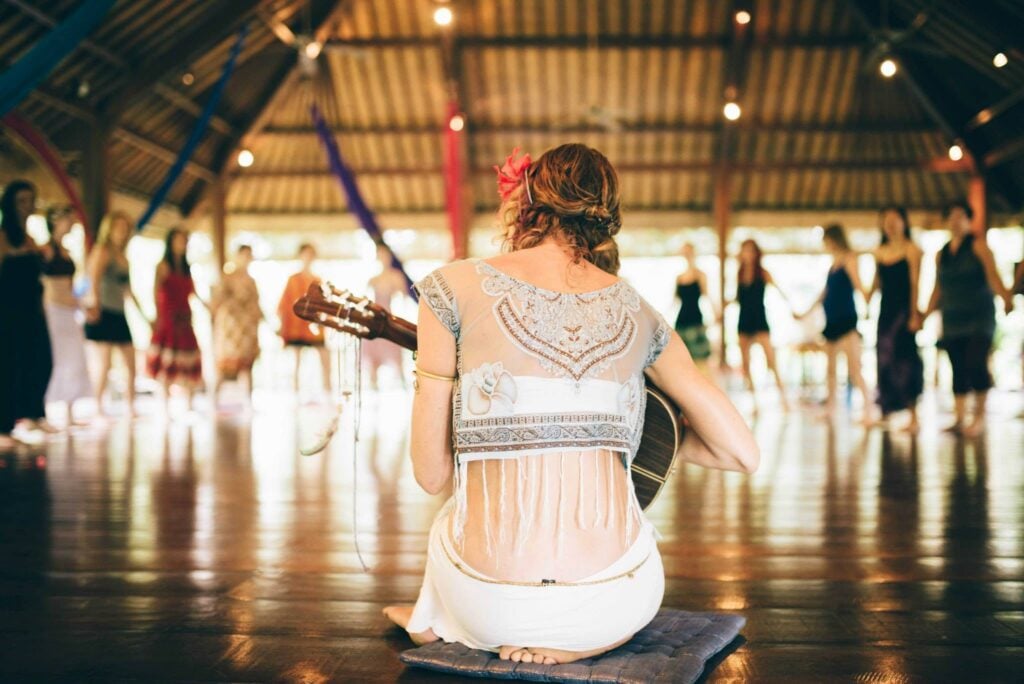
You hold space for people. Yoga classes, workshops, women’s or men’s groups, retreats, circles of every kind. You’d love to bring singing into the room, and every time you picture yourself starting the first song, a little voice in your head says, “Who am I to lead singing? I’m not a singer.”
By the end of this page you’ll have a simple ten-step flow for your first singing circle, the agreements that help people feel safe to make sound, and a 90-second practice to steady your own voice before you begin.
Try this first (about 90 seconds)
Before your next class, stand with your feet under you and let your jaw soften. Breathe in through your nose and sigh out loud three times. Then hum one low, comfortable note for a whole exhale, and one more. Now sing the first line of a song you love, slowly, starting on that same easy note. That note is home. It’s the note you can lead from.
If you’ve done the trainings and the courses, maybe even a few singing lessons, and you still freeze at the thought of starting a song, that makes so much sense. The insight lives in your head. The block lives in your body. Your own voice needs to feel safe in the room before it can make the room feel safe for anyone else, and that comes from practice, out loud, a little at a time.
I want to gently offer another way to see it, because you can lead a singing circle with the voice you already have.
A singing circle needs someone who holds space and wants to hold it more fully. It needs a warm, steady voice that people can follow, and a leader who makes it safe to sound imperfect. A perfect voice is optional. In fact, a leader who sounds real and relaxed often helps people open up more than a polished one, because nobody feels they have to live up to anything.
Which of these sounds like you?
Almost every new circle leader carries one worry louder than the rest. Pick yours and jump to the step that helps it most.
- My voice isn’t good enough to lead. Your steadiness matters far more than your range. Start with choosing simple songs.
- I’m scared nobody will sing back. People sing when they feel safe, and safety is something you can set up. Start with making it safe first.
- I don’t know how to structure it. A circle has a simple shape you can follow every time. Start with knowing why you’re gathering.
- I’m worried about using songs from other traditions. Songs travel through people, and you can carry them with care. Start with carrying songs with integrity.
Here’s how I’d guide you to lead your first singing circle, step by step.
1. Know why you’re gathering
Before you choose a single song, get clear on the intention. Is this circle for connection? For devotion? For grief, celebration, the new moon, or the pure joy of singing together?
Your intention shapes everything: the songs, the pace, the words you use to open. It also gives you somewhere to come back to if you feel nervous. Serving the intention is your whole job.
2. Make it safe before you make it musical
This is the heart of it. People’s voices open when their nervous systems feel safe, so safety comes first, every time.
At the start, share a few simple agreements out loud:
- Nobody has to sing. Listening is participating.
- Humming counts.
- There’s no such thing as a wrong note here.
- We don’t comment on anyone’s voice, only on our own experience.
- What’s shared in the circle stays in the circle.
You’ll see shoulders drop as you say these. For many people, it’s the first time anyone has told them their voice is welcome exactly as it is.
3. Help people arrive
Give people a moment to land before asking anything of their voices. You might go around and share names and one word for how everyone is feeling. Online, invite people to share in the chat where they’re tuning in from and what they’re bringing today. Some facilitators love to have everyone draw an oracle card as a gentle intention.
Keep it short and light. The goal is for people to feel who’s in the room.
4. Land in the body
Now bring everyone into their bodies with a few deep breaths together, then sigh them out loud, which is often the first sound anyone makes and usually gets a laugh. Hands on hearts. If it suits your circle, three Oms together is a lovely way to blend voices without anyone singing alone.
5. Warm up the body and the voice
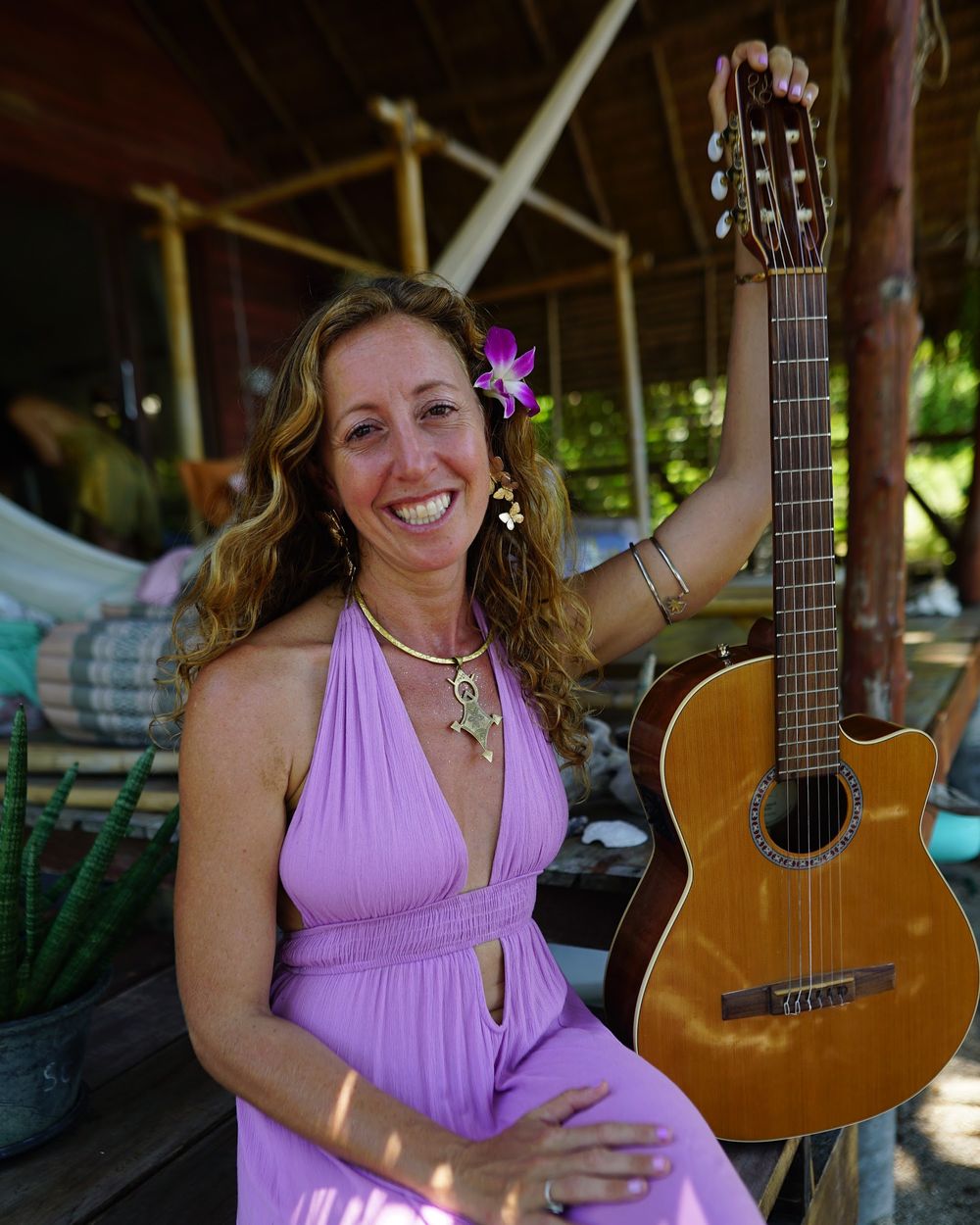
The voice lives in the whole body, so warm up the whole body. Roll the shoulders, massage the jaw, stretch the tongue, pull silly faces, shake everything out. Gentle humming and soft sirens, sliding low to high, wake the voice up without any pressure.
A playful warm-up does something important: it lowers the stakes. When everyone has just made ridiculous faces together, singing a simple song feels easy by comparison.
6. Choose simple songs
For your first circles, choose songs that are:
- short and repetitive, so people learn them by ear
- call and response, so nobody has to know the words ahead of time
- in a comfortable, middle range for most voices
- songs you know well and love
Mantras and medicine songs work beautifully, as do simple chants in your own language. Teach line by line: you sing a line, the circle sings it back. Repeat each song many times. By the third or fourth round, people stop thinking and start feeling, and that’s often when harmonies start to appear on their own.
If you’re nervous about pitch, start the song on a note that sits easily in your own voice. Your steadiness matters far more than your range.
7. Carry songs with integrity
Songs travel through people. Before you sing, name who carried the song to you, and where it comes from if you know. Take care with songs from Indigenous and ceremonial traditions, and ask whether a song is meant to be shared in the setting you’re holding. Learn the meaning of the words, and do your best with pronunciation.
This matters so much to me that I wrote a whole post about it: The Art of Songcarriers.
8. Let the room co-create
Once people are warm, invite requests. Ask what the room is in the mood for. Let people add harmonies, drums or shakers. The more the circle shapes itself, the more it belongs to everyone.
9. Make space to share
Near the end, open some space for anyone who wants to share how they’re feeling. Keep it optional, and keep your responses simple. A warm “thank you for sharing” is often all that’s needed. You’re holding space, and holding space means letting people’s experience be theirs, without fixing, analysing or advising.
10. Close with care
Close the way you opened, with intention. Gratitude, a moment of silence, or three final Oms together. Let people leave gently.
The worries almost every new circle leader has
“My voice isn’t good enough.” Your voice only needs to be clear enough to follow. People are listening for warmth and safety far more than technique.
“What if I forget the words?” Keep lyric sheets nearby, or project them online. Forgetting a word and laughing about it gives everyone permission to be imperfect too.
“What if nobody sings?” Start with humming and sighing, which almost everyone will join. Keep singing yourself, steadily and kindly. Voices usually follow once the room warms up.
“What if someone gets emotional?” It happens, because singing opens the heart. Breathe, stay present, keep the song going gently if it feels right, and offer a tissue and a kind glance. Tears in a circle are often a sign of safety.
Your voice is enough to hold the room
The circles that change people are held by leaders who are present, warm and willing to be real. That’s something you can grow into, one circle at a time.
Want a map for your first one? My free Vocal Flow Facilitator’s Blueprint walks you through a whole 60-minute circle, step by step, with two gentle vocal warm-ups, a heart song to share and three essentials for a space that feels safe and sacred. It’s the structure I use myself, and you don’t need to be a singer to lead with it.
You might also enjoy What Happens at a Singing Circle?, which walks through a circle from the participant’s side.
Want to lead your first circle with a flow you can trust?
My free Vocal Flow Facilitator’s Blueprint gives you the whole 60-minute circle, step by step: two gentle warm-ups, a heart song to share and the three essentials for a space that feels safe and sacred.
Send me the Blueprint
About Francie
Francie La Flow is a voice healer, somatic guide and bhakti musician based in Ubud, Bali. For more than 15 years she has helped people come home to their voices through yoga, sound, singing circles, retreats and 1:1 sessions.