What Happens at a Singing Circle? A Gentle Guide for First-Timers (Even If You Think You Can’t Sing)
You love the idea of singing with other people. Then you picture the moment someone smiles and says “Okay, let’s sing!”, your throat tightens, a little voice says “but I can’t sing”, and you’re already planning how to hide at the back…
By the end of this page you’ll know exactly what happens at a singing circle, from the first breath to the last Om, and you’ll have a tiny practice to take with you, so your voice feels a little safer before you walk in.
Try this first (about 90 seconds)
Put one hand on your chest. Breathe in through your nose, then sigh it out loud, a little messy. Do that twice. Now hum one long note, any note at all, and feel it buzz under your hand. Hum three more times. That is exactly how a circle begins, with breath and a hum, and you just did it on your own!
If you’ve sung along in the car for years, been to kirtan, maybe even had a singing lesson or two, and your voice still disappears the moment other people can hear it, nothing is wrong with you. The insight lives in your head. The fear of being heard lives in your body. A circle helps because your body gets to learn, one round at a time, that making sound around other people is safe.
If your stomach just dropped a little, you’re in very good company. So many of the people who end up loving singing circles arrive convinced they can’t sing, sure everyone will hear them, and ready to hide at the back. By the end, a lot of them are singing.
I’ve been holding and singing in circles for years, and I’d love to take the mystery out of it for you. Here’s what happens at a singing circle, what to expect your first time, and why nobody is listening for “good”.
Which of these sounds like you?
Most first-timers arrive with one worry sitting right on top. Pick the one that feels most familiar and jump straight to it.
- I’m scared I’ll be off-key. Nobody is listening for good in a circle, and your voice blends into everyone else’s. Start with “But I can’t sing”.
- I go quiet the moment others can hear me. Most circle songs are call and response, so you never sing alone. Start with how the singing works.
- I don’t know the songs or what I’m supposed to do. You never need to know anything ahead of time. Start with the circle step by step.
- I’m worried I’ll get emotional. Singing opens the heart sometimes, and there is room for that. Start with what to bring.
What a singing circle is
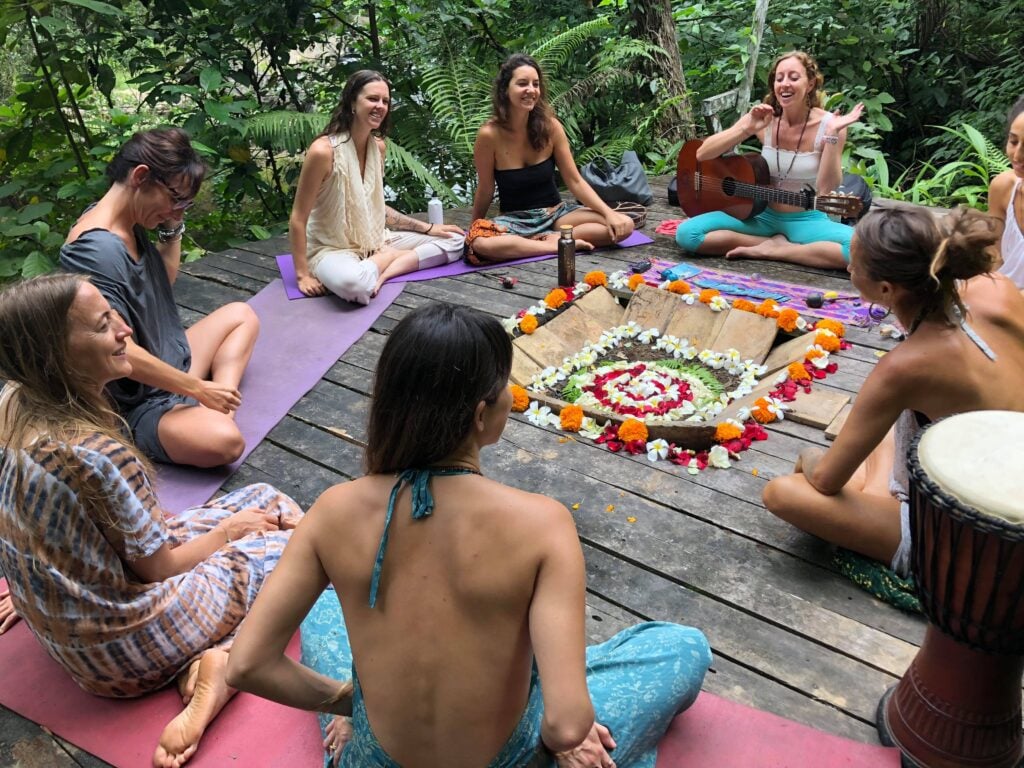
A singing circle is a group of people who gather to sing together, usually simple, repetitive songs that are easy to learn by ear. There’s no audience and no stage. Everyone faces each other, or faces the same screen, and the whole room is the choir.
Circles go by lots of names: song circles, heartsong circles, voice circles, kirtan, medicine song gatherings. The songs might be mantras in Sanskrit, medicine songs in Spanish, or simple chants in English. The flavour changes from circle to circle, and the heart of it stays the same: people making sound together, and feeling a little more at home in their own voice because of it.
What happens in a circle, step by step
Every circle has its own rhythm. Here’s how the circles I hold usually flow, so you know what you’re walking into.
Arriving
We start by landing in the room together. Online, I invite cameras on if that feels okay, and people share in the chat where in the world they’re tuning in from and what they’re bringing with them today. Sometimes we pick an oracle card as an intention. It’s a simple way to feel who’s here before anyone sings a note.
Landing in the body
Next we come into the body. A few deep breaths, then sighing them out loud, which is often the first sound anyone makes and usually gets a laugh. Then hands on the heart, a dedication, and three Oms together.
Warming up
Then we wake up the body and face, because the voice lives in the whole body. We loosen the jaw, stretch the tongue, shake out the self-consciousness (we actually shake!), and gently tap the head and the heart as a way of giving ourselves permission: permission to rest, permission to feel, permission to take up space. There’s usually a lot of laughter in this part, and I love that, because laughing is one of the quickest ways I know to soften a tight throat.
Singing
Then we sing, usually several songs. Most of them are call and response: I sing a line, you sing it back. You never have to know the words ahead of time, and you never sing alone.
We repeat each song many times, so by the third or fourth round your body starts to know it. That’s often when something lovely happens: people stop thinking about their voice and start feeling the song. Harmonies appear out of nowhere. The sound gets bigger and softer and bigger again.
I also like to take requests, and I often ask the room whether we’re in the mood for Spanish, English or Sanskrit. And before we sing, I name the person who carried the song to me, because songs travel through people and it matters to honour where they came from. I wrote more about that in The Art of Songcarriers.
Sharing and closing
Toward the end there’s space to share, on camera or in the chat, or silently in your own heart. Nobody has to speak. We close with gratitude and three more Oms, and people usually leave a lot lighter than they arrived.
“But I can’t sing”
I hear this more than anything else, so let’s talk about it.
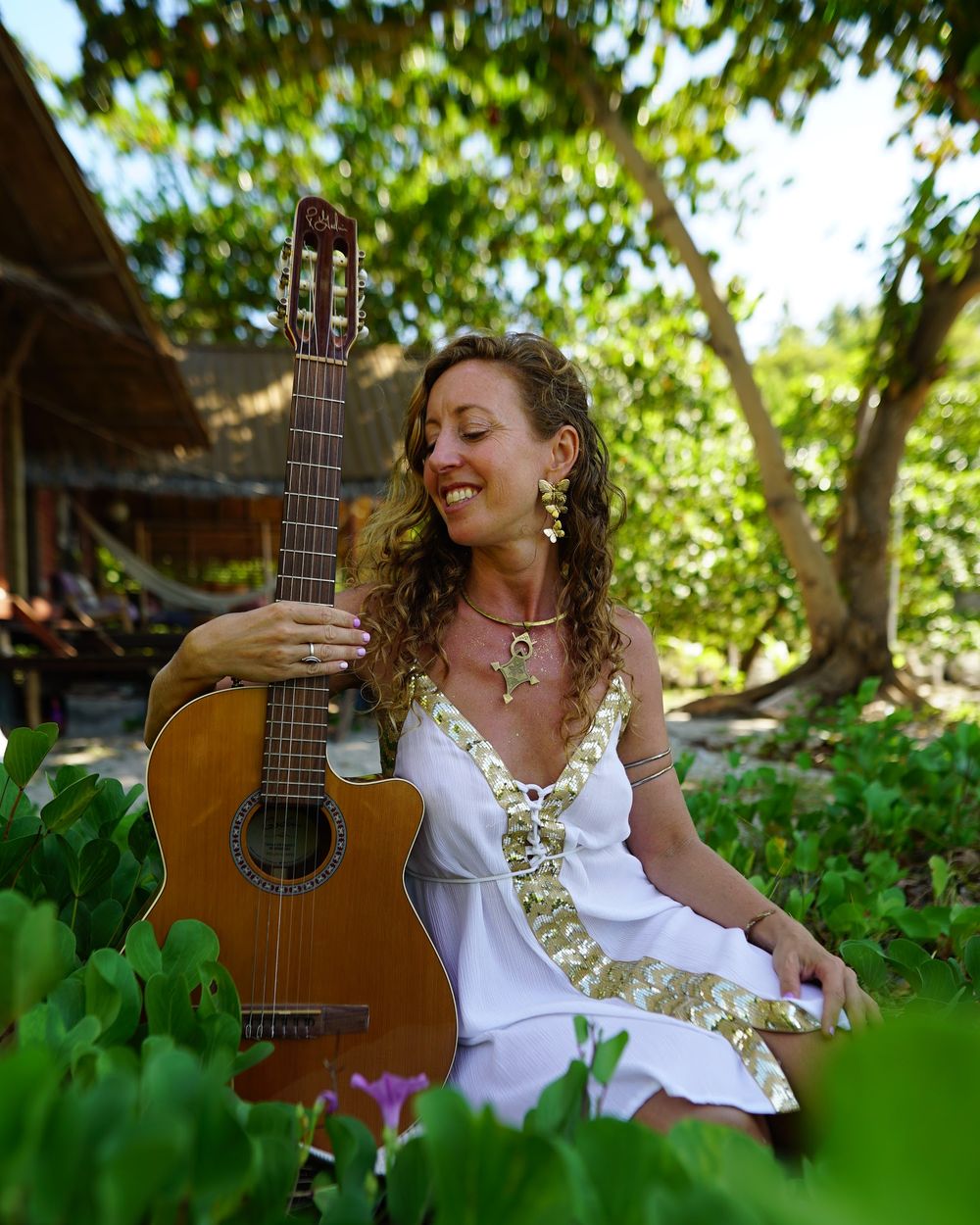
In a circle, nobody is listening for good. Your voice blends into the group sound, so nobody can pick you out, and everyone is too busy with their own voice to notice yours. If singing feels like too much, hum. Humming counts! You can also just listen for a whole song and join in when your body feels ready.
What I’ve seen again and again is that the voice relaxes when the pressure comes off. When there’s no performance, no solo and no grade, the throat softens, the breath deepens and sound starts to come more easily.
One of my favourite quotes about this comes from Gabor Maté: “Safety is not the absence of threat but the presence of connection.” A circle is connection you can hear.
Why singing together feels so good
When a room full of people sings the same simple song over and over, something shifts. Long phrases lengthen the out-breath, which tends to settle the body. The repetition gives the busy mind something to rest on. And the sense of belonging, of being one voice among many, lets a lot of people feel safe enough to open up in a way they couldn’t on their own.
These are the words I keep coming back to when I think about why I sing in circle:
It is our birthright to sing, to belong to a world where our voices can be seen, heard and held. It is our responsibility to heal, to expand our capacity to give and receive love, to sing each other home, and to bring harmony to the world.
What to bring to your first circle
- A bottle of water or a warm tea
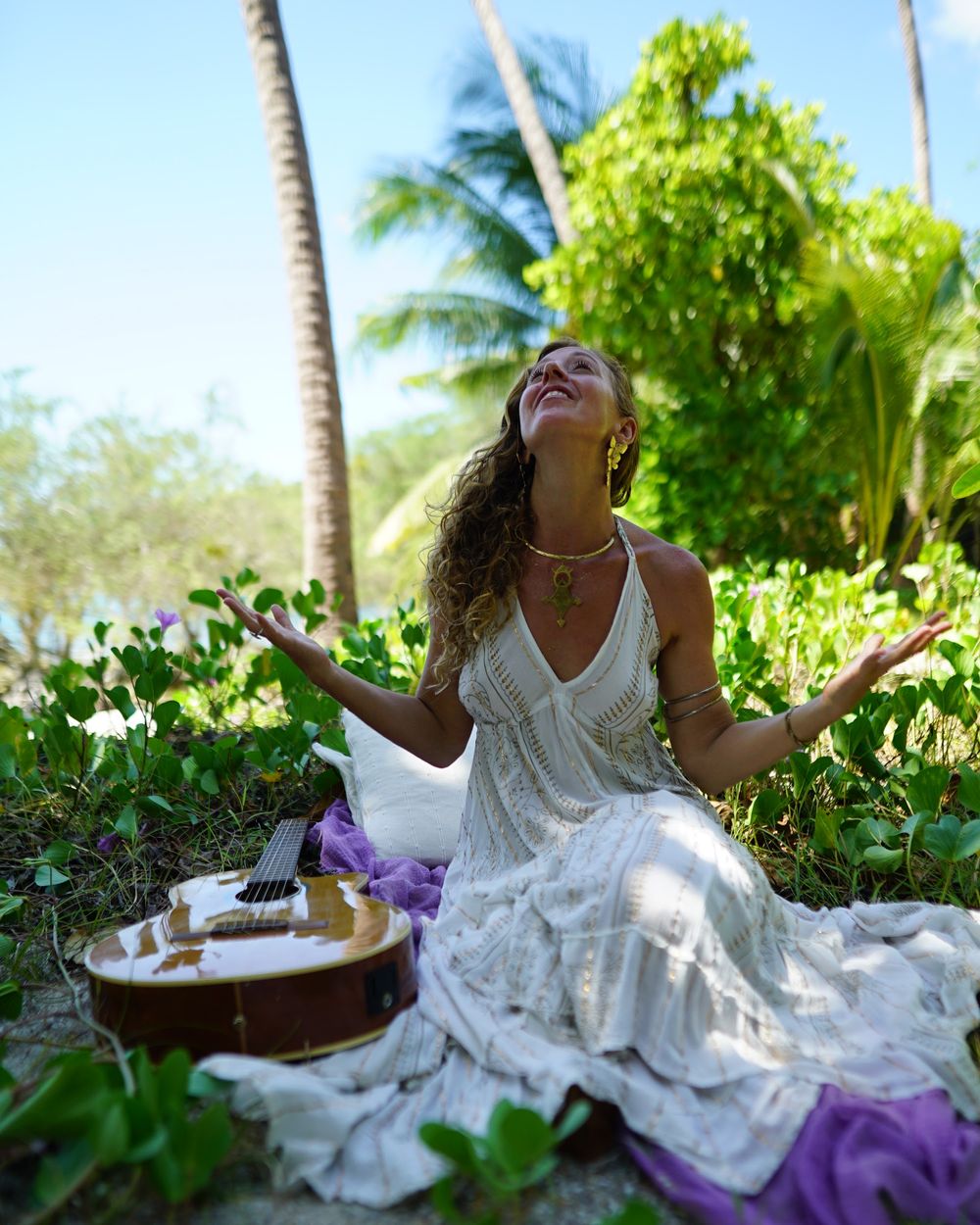
- Something cosy to sit on, and a shawl if you run cold
- Tissues, just in case, because singing sometimes opens the heart
- An open mind about your voice, even if it’s only a tiny bit open
If you’re joining online, find a spot where you feel comfortable making sound, and remember you can mute yourself anytime. Some people love singing on mute at first, because they can sing fully without anyone hearing a thing.
How to find a singing circle near you
Yoga studios, community centres, kirtan nights and retreat centres often host circles, so it’s worth asking around or searching “singing circles near me”. Online circles are a beautiful option too, especially if you’d rather start from the comfort of your own home.
I’ve also written about the healing power of singing together in circle, if you’d like to read more.
Want to walk into your first circle already feeling at home in your voice?
Start with my free voice practices: a Permission to Sing meditation, a vocal care ritual and a playlist to sing along with. Nobody hears you but you.
Send me the free practices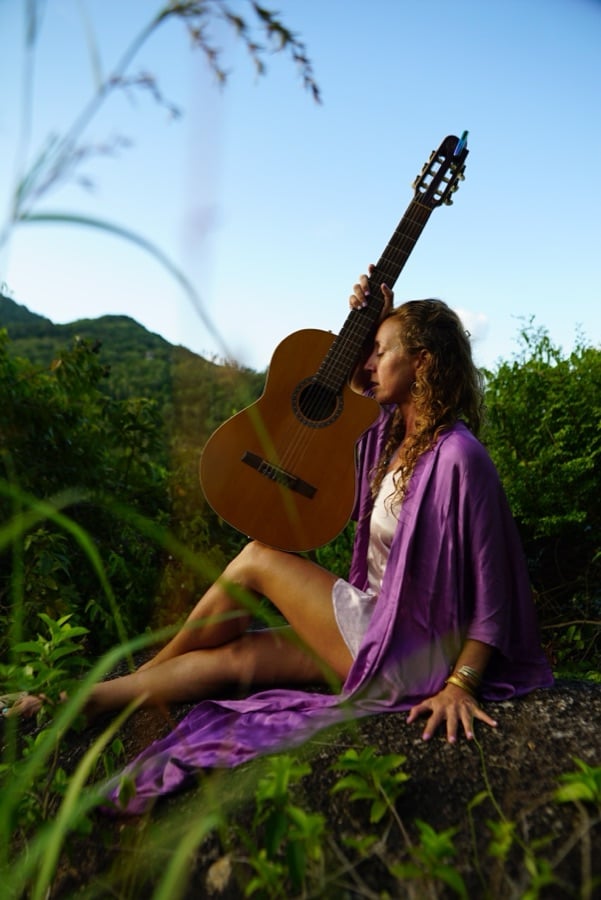
About Francie
Francie La Flow is a voice healer, somatic guide and bhakti musician based in Ubud, Bali. For more than 15 years she has helped people come home to their voices through yoga, sound, singing circles, retreats and 1:1 sessions.