What Is Somatic Voice Healing? How Your Body Shapes the Way You Speak and Sing
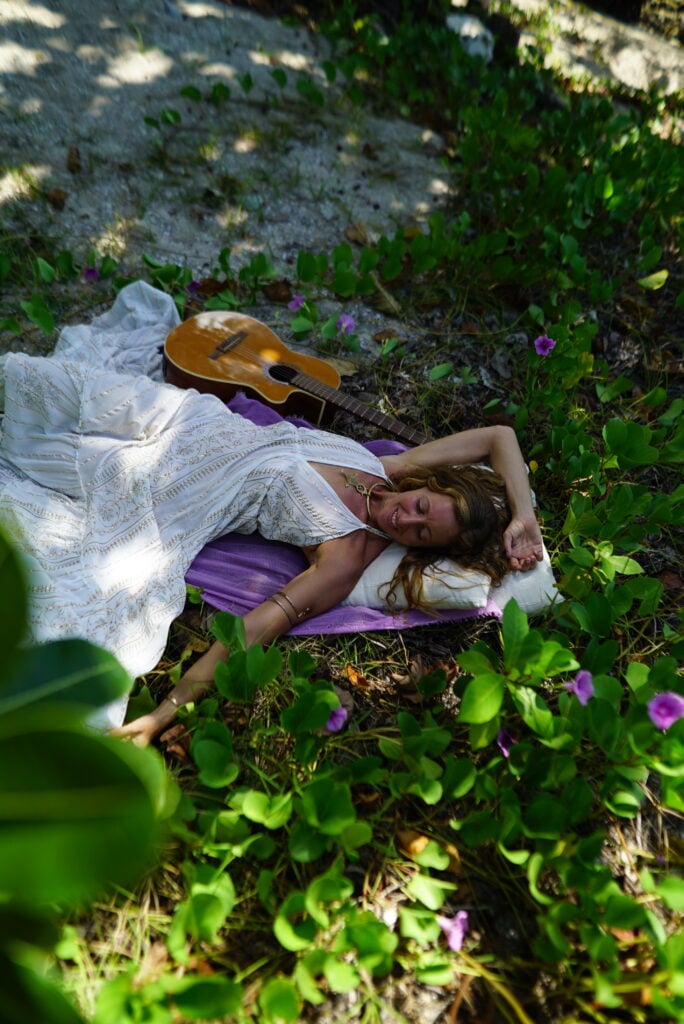
Your voice rushes when you’re anxious, goes thin when you feel small, and closes right when it matters: in the meeting, on the video, in the conversation you’ve rehearsed a hundred times in the shower. You’ve done so much inner work, and your throat still hasn’t caught up.
By the end of this page you’ll know what somatic voice healing is, why your body has the final say over your voice, and you’ll have a 90-second practice you can feel today.
Try this first (about 90 seconds)
Let your teeth come apart and your tongue rest. Take three breaths out loud, sighing them out, a bit messy. Then hum once, wherever the note lands, and notice where you feel it: chest, throat, face or lips. Hum once more, a little longer. Anything softer in your throat? That is somatic voice healing in miniature.
For a year and a half, I could barely speak. It hurt to talk and it hurt to sing. I flew all the way home to Canada to find out what was wrong, and the doctors put tubes down my throat, told me my glands were swollen, and sent me off to rest and drink more ginger tea. Eye roll!
What finally helped came slowly: a gentle question from a friend, nearly ten years of learning about trauma, the nervous system and the body, and a whole lot of listening to what happened inside me every time I opened my mouth. That listening has a name. It’s called somatic voice healing, and it sits underneath everything I teach.
So if you’ve landed here wondering what somatic voice healing is, and whether it might be for you, make yourself a cup of tea (ginger optional) and stay a while.
What “somatic” means
The word comes from the Greek soma, which means body. In somatic work it points to the body as you feel it from the inside: the tightness in your chest before a hard conversation, the warmth that spreads when someone you love walks into the room, the lump that shows up in your throat right when you want to say the true thing.
Somatic voice healing brings that inner listening to your voice. We work with your breath, your jaw and tongue, your ribs and belly, the vibration of sound in your body, and the thing that shapes all of them: how safe your system feels in this moment.
Why your voice tells the truth
Your voice is one of the most honest storytellers you have. It carries your truth, your fear, your history and your longing to be heard, often before you’ve decided what to say.
There’s a physical side to that. Branches of the vagus nerve, the long nerve that helps your body move between stress and rest, supply the muscles of your voice box. Your breath, your posture, your jaw, your tongue and your larynx all shift depending on how safe or unsafe you feel.
You can perform a calm face. You cannot perform a relaxed throat.
That’s why so many people feel like their voice has a mind of its own. It rushes when you’re anxious, it thins out when you feel small, and it goes flat and careful around certain people.
Which of these sounds like you?
Most of us have a go-to protection response, and which one shows up depends on the room you’re in. Pick the one that feels most familiar, then jump to the part of the practice that helps it most.
- My words get stuck. You whisper, trail off, or feel a lump in your throat. That’s the freeze voice. Start with one hum.
- I talk fast and rush past what I mean. Too fast, breathless, pitch creeping higher. That’s the flight voice. Start with three audible sighs.
- My voice pushes, gets loud or clipped. A tight jaw, forceful words. That’s the fight voice. Start by softening your jaw.
- I soften everything and end on a question. Upspeak, apologising, matching whoever you’re with. That’s the fawn voice. Start with simple spoken truth.
I wrote about each one in much more detail, with the small practices that help each of them soften, in Trauma and the Voice. For now, here’s the part I most want you to hear: every one of them is your nervous system doing its job. Your voice has been trying to keep you safe.
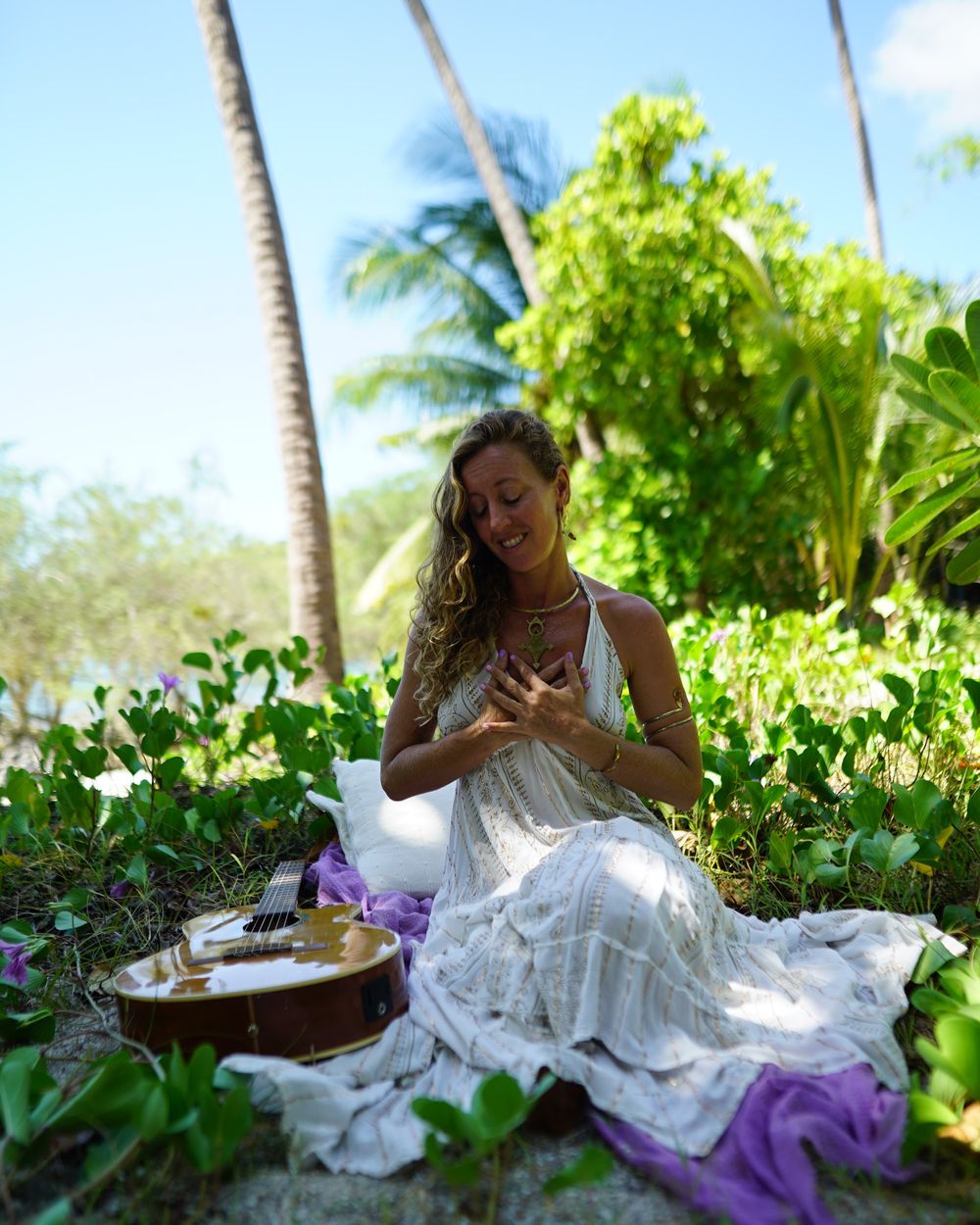
The insight lives in your head, the block lives in your body
Most of the people who find their way to me have already done a lot of inner work. They’ve read the books and done the journalling. They can tell you exactly where their silence came from. And yet, when it’s time to speak up in the meeting, sing the song or press record on the video, something in their throat still closes.
Understanding is a beautiful beginning. On its own, it rarely unwinds a pattern the body has been holding for decades, because the body learned that pattern through experience, and it tends to learn a new one through experience too.
That’s the heart of somatic voice healing. We give your body a new experience of making sound and staying safe, in small doses, again and again, until your system starts to believe it. I wrote more about this in Why You Can’t Think Your Way to Authentic Expression.
What somatic voice healing looks like in practice
The sequence I come back to over and over is this: safety in the body, then the breath opens, then sound opens, then expression flows.
Most of us try to run it backwards. We go looking for confidence first and hope the sound will follow. In my experience, confidence shows up last, as the result of all the steps before it.
Here’s the practice from the top of the page again, step by step. It takes about ninety seconds.
- Soften your jaw and let your teeth come apart.
- Take three breaths out loud. Sigh them out, audible and a bit messy.
- Hum once. No particular note, just a hum wherever it lands.
- Notice where you feel it: chest, throat, face, lips.
- Hum once more, a little longer this time.
You’re at home. Nobody can hear you. There’s nothing to get right here, and humming counts!
What you just did is somatic voice healing in miniature. You gave yourself permission, you let your breath lead, and you let sound move through your body with no performance attached. My favourite way to say it: relax into sound instead of reaching for it.
In sessions and circles we build on that foundation with breath, gentle movement, toning, singing and simple spoken truth statements, always at a pace your nervous system can say yes to. And permission comes first every time: permission to be imperfect, to be messy, to make a sound that isn’t any good.
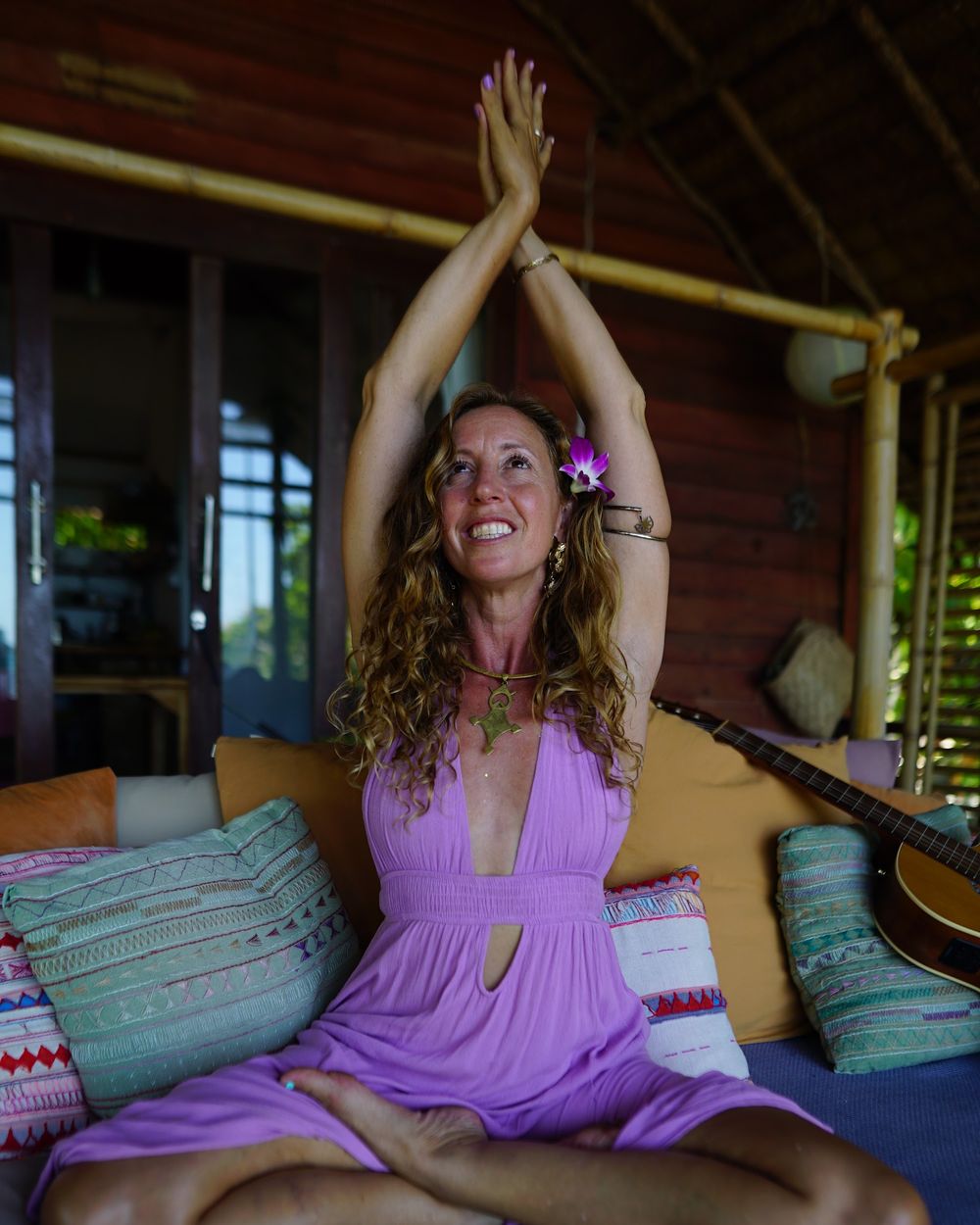
How it differs from singing lessons
Singing lessons train the instrument: pitch, range, technique and repertoire. They’re wonderful, and a good vocal coach is worth their weight in gold.
Somatic voice healing tends to the person playing the instrument. We look at the safety, the breath and the old protective patterns that tighten the throat before a single note comes out. Plenty of people do both, and the two support each other beautifully.
You also don’t need to sing at all to benefit. A lot of this work is for people who want to speak up at work, say what they need at home, or show up on camera without their voice shrinking to half its size.
Who it’s for
Somatic voice healing tends to call to people who:
- have done years of inner work and still feel their voice close when it matters
- trail off at the ends of sentences, or apologise before they speak
- love kirtan or sharing circles, and sing so softly that nobody could hear them
- teach, coach or hold space, and want their voice to carry what they know
- were told at some point to be quiet, and part of them listened
If you’re nodding along, you’re so welcome here. No singing experience required.
Your voice was protecting you
When I finally understood what had happened to me, I could see two layers. The rupture that took my voice was traumatic, yes. Underneath it lived something much older: a childhood pattern of shrinking, of trying not to disappoint, of fearing what would happen if I spoke too boldly or took up too much space.
My voice was protecting me. It was expressing the truth that my mind couldn’t yet name.
That’s what I hope you take with you today. Your voice is a compass. It remembers everything your body has lived through, and as safety returns to your body, your voice comes back with it: stronger, clearer and more authentically you.
If you’d love support to go deeper, Rising Resonance is my private six-week journey, one to one with me, for exactly this work.
Want your voice to feel this safe every day?
Start with my free voice practices: a Permission to Sing meditation, a short vocal care ritual and a playlist to sing along with. You can begin tonight at home, where nobody hears you but you.
Send me the free practices
About Francie
Francie La Flow is a voice healer, somatic guide and bhakti musician based in Ubud, Bali. For more than 15 years she has helped people come home to their voices through yoga, sound, singing circles, retreats and 1:1 sessions.