Trauma and the Voice: Why Your Voice Shuts Down

Trauma and the Voice: Why Your Voice Shuts Down

← Back to Pureflow

Why Your Voice Shuts Down: Trauma, the Nervous System and the Throat

Francie La Flow resting her forehead against her guitar in the jungle

The lump in your throat before you say no. The voice that shakes in the meeting, goes small with your mother, or just disappears right when you need it most…

By the end of this page you’ll know which protective voice shows up for you and why, and you’ll have a practice you can feel in about 90 seconds to help your voice come back.

Try this first (about 90 seconds)

Put one hand on your chest. Let your jaw hang a little open. Breathe in through your nose, then hum on a long, easy exhale, any note at all, until the breath runs out. Do it five times, and let each hum get a little softer. Then say one short, true sentence out loud, like “I’m here.” Notice your throat. Anything a little softer or steadier?

The short answer

Your voice shuts down because your nervous system is protecting you. The nerves that move your vocal folds are branches of the vagus nerve, so your voice changes the moment your body senses pressure or danger. It can push (fight), rush (flight), go stuck and quiet (freeze), or turn soft and pleasing (fawn). Which one shows up depends on the situation and the person in front of you. When your body feels safe again, your voice comes back. Safety comes first, then breath, then sound.

Your voice is a tell-all.

You can put on a calm face in a hard conversation. Your throat will still tell the truth. It tightens, it wobbles, it trails off at the end of the sentence, or it disappears completely right when you need it most.

If that’s you, I want you to know something before we go any further. There is nothing wrong with you. Your voice is doing exactly what it learned to do to keep you safe. It’s intelligence. And what your body learned, it can learn again, gently, at a pace it can say yes to.

I know this from the inside. For a year and a half my own voice disappeared. I’ll tell you that story below, along with what I’ve learned since from fifteen years of teaching, somatic training, Compassionate Inquiry and hundreds of people singing in circles with me.

Which of these sounds like you?

Your voice protects you in its own particular way, and the way changes with the room you’re in. Most people recognise two or three. Pick the one that feels most familiar today, then jump straight to it.

  • My words get stuck. You go blank, quiet or frozen, and later think of everything you wanted to say. That’s the freeze voice. Go to the stuck voice.
  • My voice goes soft or high, and I apologise and over-explain. You smooth things over and keep everyone comfortable. That’s the fawn voice. Go to the pleasing voice.
  • I talk fast and rush past what I actually mean. You fill the silence so nobody can interrupt. That’s the flight voice. Go to the rushed voice.
  • My voice pushes, gets loud or sharp. You brace to make sure you get heard. That’s the fight voice. Go to the pushed voice.

Why your voice shuts down

Long before you decide what to say, your body has already decided whether it’s safe to say it.

Your nervous system is scanning all the time. Who’s in the room? Whose face just changed? What happened the last time you spoke up like this? When the answer feels risky, your body shifts into protection, and your voice is one of the first places it shows.

The breath moves up high into your chest and gets shallow. Your jaw and tongue tighten. The muscles around your larynx brace. There’s less steady air under your sound, so the voice goes thin, shaky, forced or silent.

This is why so many deeply wise, self-aware people come to me saying some version of “I know exactly what I want to say, it just won’t come out.” Knowing and saying live in different parts of you. Your voice answers to your body first.

The good news? Your body is always listening. Each time you speak and stay safe, it collects a little more evidence that expression is allowed.

My story: the year my voice disappeared

As a child, I loved musical theatre. Singing and dancing lit me up and I lived for the next production. I wanted so badly to be an actress, singer and dancer when I grew up. My voice was my happy place. It felt like the place where I could be fully myself.

Years later, after training to become a yoga teacher, I entered a spiritual community led by teachers I admired deeply. I placed them on a pedestal. They dressed in all white, and seemed to have access to the highest wisdom I’d ever come across. When they brought me into their inner circle, it felt like a sign that I was finally growing into my full potential as a human. They helped me build a retreat business I loved, one that was fulfilling and supported me and other causes financially. It was a dream come true. Until it wasn’t.

One day in 2016, they ended our relationship abruptly, in a letter. They told me I was not to contact them again. They said that if there was an emergency, I could reach out to them only through their new protégé, a woman who had once been my assistant.

They ghosted me, with no explanation, no conversation and no closure.

My heart fractured. The mind, without clarity, goes into dissonance. And because I had no way to process the rupture or speak my truth, something inside me shut down.

Slowly, my literal voice began to disappear.

For a year and a half, I could barely speak. My throat was constantly sore. It hurt to talk. It hurt to sing. If I slept poorly or was even slightly out of balance, the pain worsened and my voice would vanish entirely. I feared something was seriously wrong.

At first I thought it was a physical issue. I even flew all the way home to Canada. Doctors put tubes down my throat and told me my glands were swollen and I needed more rest and more ginger tea.

Then one day a friend gently asked me, “Has anything emotional happened to you recently?” In that moment, everything I had learned in yoga and in my psychology studies came together. My emotions, my nervous system and my voice had been connected all along.

It took nearly ten years of studying trauma, the nervous system and somatics to see the deeper truth. Yes, the rupture was traumatic. And the reaction lived in an older wound: the childhood pattern of shrinking, of staying small, of trying not to disappoint, of fearing rejection, of fearing what would happen if I spoke too boldly or took up too much space.

My voice was protecting me. It was expressing the truth that my mind couldn’t yet name.

I’m sharing this because if I could find my way back to my voice after a year and a half of barely speaking, you can find your way back to yours too.

How your nervous system and voice are wired together

The vagus nerve is the longest cranial nerve in your body. Its name means “wandering”, and it wanders a long way: from the brainstem down through the throat, heart and lungs to the gut.

On its way down, it sends branches to your larynx. The superior laryngeal nerve helps set your pitch. The recurrent laryngeal nerve moves most of the other small muscles that open and close your vocal folds. On the left side it loops right down around a major artery near the heart before travelling back up to the throat. I love that detail. Your voice is quite literally wired through your heart.

The vagus nerve also carries a huge amount of information upward, from your body to your brain. Your body notices first. Your mind explains it afterwards.

Stephen Porges, in his polyvagal theory, describes a “social engagement system” that links the nerves of your face, your middle ear, your throat and your voice. When you feel safe with someone, your face softens, your voice gets warmer and more melodic, and you can hear them better. When you don’t, those muscles change, and so does your sound. Researchers still debate parts of the theory, and it has given many of us a helpful map for something we feel every day.

Therapist Deb Dana puts it in three words I come back to all the time: “Story follows state.” The state of your nervous system arrives first, and the story you tell yourself follows it. You can rewrite that story a hundred times in your journal. Until your body feels safer, the throat keeps doing what it does.

So when we work with the voice, we start with the body. I wrote more about this wiring, and how sound can support it, in my guide to the vagus nerve and the voice.

The four protective voices

When your nervous system senses threat, it reaches for one of four survival strategies: fight, flight, freeze or fawn. Each one has a sound.

Most of us have a go-to protection response, and which one shows up depends on the situation. You might freeze with your boss, fawn at a family dinner and push with the person closest to you. Protection shifts with the room and with the person in it. So as you read, notice where each one visits you.

There is nothing to fix here. Each of these voices has kept you safe. Awareness comes first, and change grows from there.

Fight: the pushed voice

What it sounds like. Loud, sharp, fast. Clipped phrases. A voice that pushes to be heard and struggles to soften.

What it feels like. Heat rising in your chest and face, a tight jaw, a braced throat, strained vocal folds by the end of the conversation.

Why it happens. Fight is a mobilising response. Your body prepares to confront the threat, so the voice gets bigger to create safety through strength.

One practice: the long exhale hum. Drop your shoulders and let your jaw hang a little open. Breathe in through your nose for four. Then hum on a low, easy note for as long as the exhale lasts, eight counts or more. Do three rounds. Let the sound get smaller and softer each time.

Flight: the rushed voice

What it sounds like. Fast and breathless. A higher pitch than usual. Words spilling out, interrupting, trailing off as you race to the end.

What it feels like. Shallow breath high in the chest, a buzzy restlessness, running out of air mid-sentence.

Why it happens. Flight is a mobilising response built for escape. The voice tries to move fast enough to get out of the discomfort.

One practice: feet, pause, “sss”. Press your feet into the floor and feel the ground push back. Breathe in slowly through your nose, then release the breath on a long “sssss”, like air slowly leaving a tyre. Before your next sentence, pause for one full breath. The pause is allowed.

Freeze: the stuck voice

What it sounds like. Quiet, thin, or nothing at all. Whispering. Losing your voice mid-sentence.

What it feels like. A lump in your throat. Your mind goes blank. Words you swallow before they can come out.

Why it happens. Freeze is an immobilising response. When moving or speaking feels unsafe, your body chooses stillness, and silence becomes a shield. Freeze was my go-to. It’s the voice that disappeared on me for a year and a half.

One practice: warm, small and lying down. Rub your palms together until they’re warm and rest them on your throat and chest. Wiggle your fingers and toes. Then, lying down if you can, let out a sigh with a little sound in it. Then a few quiet hums. Freeze thaws with warmth and tiny movements, so keep everything small.

Fawn: the pleasing voice

What it sounds like. Soft, sweet, a little higher, ending on a question even when you’re making a statement. Apologising before you speak. Matching everyone else’s tone.

What it feels like. Watching their face while you talk. Saying yes when you mean no.

Why it happens. Fawn keeps you safe by keeping the connection. The therapist Pete Walker named this fourth response, and it’s often the one people recognise with a gasp. The voice shrinks to avoid rejection, at the cost of your own expression.

One practice: one grounded sentence. Place a hand on your chest and hum until you feel the buzz under your palm. Then say one simple true sentence, like “I’d like some time to think about it”, and let the pitch fall at the end. No softening, no question mark. Just once, out loud, to yourself. That’s the whole practice.

Which one did you recognise? Most people find two or three. That’s normal. I’d love to hear which ones visit you.

The moments your voice goes quiet

Your voice is a giveaway for what is happening inside you. And it tends to go quiet in the same kinds of moments. Think of the last time you needed to:

  • Say no
  • Name a boundary
  • Ask for what you need
  • Tell someone they hurt you
  • Disagree with someone you love
  • Say what you’re worth
  • Share your work, go live or hit post

And notice who you were saying it to. A doctor, a boss or anyone in authority. Your family at the dinner table. A room that was already loud. A camera. The moment the conversation turned to you and your own feelings.

Often the hardest moment of all is when your voice is finally for you, after years of it being for others.

Your voice changes because different people and places ask different things of your nervous system. A voice that’s full and warm about work or other people can drop and soften the second the subject turns to you. That’s your history speaking, and history can be met with compassion.

Signs your voice is protecting you

Many people live with these for years without realising the body is trying to communicate. You might notice:

  • Tightness or constriction in your throat
  • A lump, fog or heaviness before you speak
  • A throat that tires easily or feels sore after hard conversations
  • Speaking so quietly that people ask you to repeat yourself
  • Swallowing your words before they come out
  • Losing your voice during conflict or emotional stress
  • Upspeak, or softening your tone to avoid disagreement
  • Trailing off at the ends of sentences
  • Feeling blocked when you try to sing
  • A fear of being misunderstood, rejected or judged the moment you open your mouth

Each of these is a sign that your system is still protecting you.

Please check with a doctor first if you have hoarseness that lasts longer than two or three weeks, pain when you speak or swallow, a lump you can feel, or any change in your voice that worries you. Your throat deserves proper care. Once a medical cause has been ruled out, look at your nervous system too, because that is very often where the way back begins.

If you relate to the throat as an energy centre, I wrote about the chakra side of this, with seven ways to bring it back into balance, in how to balance your throat chakra.

The worthiness wound and the voice

Shyness and quietness very often grow out of the worthiness wound: the belief that your voice is unwelcome, unimportant or too much.

When early experiences taught you that expressing yourself led to punishment, dismissal or disappointment, your system learned to protect you by shrinking your voice. Gabor Maté describes a painful choice every child faces between attachment and authenticity. When being fully yourself threatens the connection you depend on, you choose the connection. Of course you do. You were little and you needed them.

That choice gets stored in the body. Decades later it shows up as the apology before you speak, the question mark at the end of your truth, the voice that goes quiet exactly when you want to be heard.

Signs this may resonate:

  • You fade out at the end of sentences
  • You apologise before speaking
  • You fear being fully seen or heard
  • You doubt the importance of your words
  • You hesitate or lose your voice under pressure
  • You use upspeak to soften your truths

Your voice remembers everything your body has lived through. It has been trying to keep you safe.

I wrote more about where this wound comes from, and five ways to work with it through your voice, in healing the worthiness wound.

“I understand why. So why is it still happening?”

This is the question I hear most from people who have done years of inner work. Therapy, meditation, retreats, books. They can explain their pattern beautifully. And their voice still shuts down in the meeting.

The insight lives in your head. The block lives in your body.

Your nervous system learns through experience, so it needs new experiences to change: speaking and staying safe, being heard and staying connected, making a sound and having it welcomed. Understanding opens the door. Practice walks you through it.

This is how I teach. First we meet what’s stored in the body, gently, so the old protection can soften. Then we cultivate joy and practice, so your voice gets stronger and has more range and more capacity to come with you into every part of your life. After years of practice my own voice still shuts down in certain moments, like when I need to express a boundary. The difference now is that I know how to come back.

I wrote more about this in why you can’t think your way to authentic expression.

A five-minute practice to help your voice feel safe
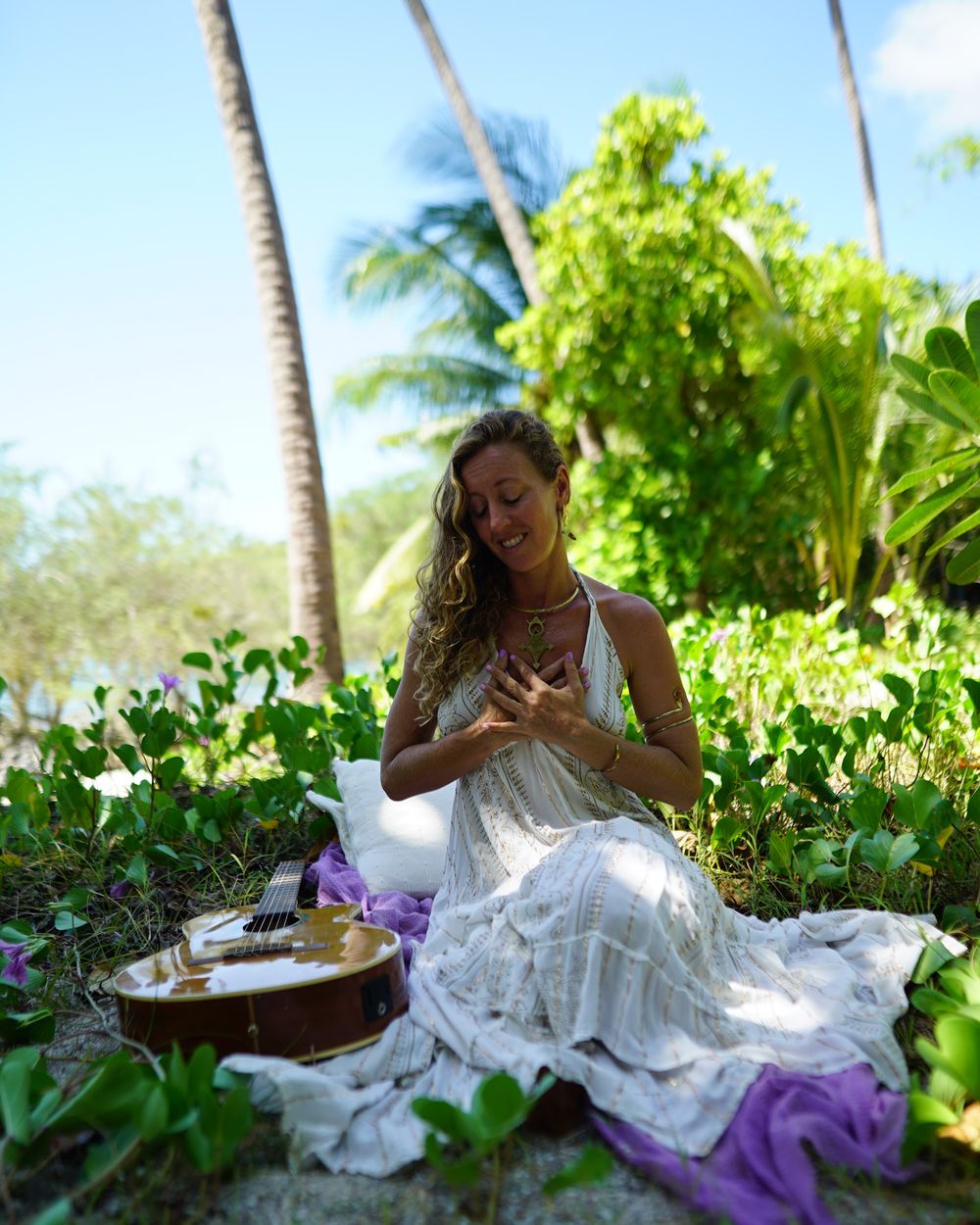
Francie La Flow sitting in meditation with her hands at her chest beside her guitar

Your voice heals through safety, warmth and presence. Here’s the practice I’d give you if we were sitting together right now. It takes about five minutes. Do it before a call, before a hard conversation, or at the start of your day.

  1. Arrive. Let your eyes slowly look around the room. Turn your head gently left, then right. Let your body register where you are, right here, right now. It’s in the present moment that healing can happen.
  2. Notice your state. Ask yourself, “What’s happening in my throat right now?” Tight, open, buzzy, heavy? Name it. You don’t need to change it.
  3. Hand on heart. Place one hand on your chest and one on your belly or throat. Feel the warmth of your own hands.
  4. Lengthen the exhale. Breathe in through your nose for four, out through soft lips for six or eight. Five rounds. Many people find a long exhale settling.
  5. Hum. On your next exhales, hum softly on any note that feels easy. Feel the vibration under your hand. Three to five hums.
  6. Give yourself permission. Say quietly, “I give myself permission to be heard.” Notice what happens when you do.
  7. Speak one sentence. Say one true sentence out loud, as slowly as you like. Then celebrate it. Small doses count.

Treat your voice as you would a child learning to trust again. Patience, warmth, and lots of celebrating.

If you want to feel how this lives in your whole body, read cultivating embodied resonance next.

When to see a doctor, and when to get support

See a doctor, or an ear, nose and throat specialist, if your voice has changed and you don’t know why, if hoarseness lasts more than two or three weeks, or if speaking or swallowing hurts. Somatic voice healing sits beautifully alongside medical care. It never replaces it.

If what you’re carrying feels big, please reach for a trauma-informed therapist as well. Your voice is allowed to have more than one person holding it.

And if your throat checks out fine and your voice still goes quiet exactly when you need it, you’re in the right place. This is the work I love most.

Want your voice to stay with you when it matters most?

Start with my free voice practices: a vocal care ritual, a Permission to Sing meditation and a playlist to sing along with. Gentle practices for safety, expression and coming home to your voice. Nobody hears you but you.

Send me the free practices

Questions people ask me

Can trauma make you lose your voice?

It can. Your voice is closely wired into your nervous system, so it shifts with how safe you feel. After a painful experience or a long stretch of stress, many people notice their throat tightening and their voice going quiet, pushing, rushing or disappearing for a while. It happened to me for a year and a half. If you have ongoing hoarseness or throat pain, please see a doctor first, then look at your nervous system too.

Why does my voice shake when I’m nervous?

When you feel under pressure, your breath moves up into your chest and gets shallow, your throat muscles tighten and adrenaline adds a tremble. There’s less steady air under the sound, so it wobbles. Lengthening your exhale, feeling your feet on the floor and humming quietly before you speak all help your body settle. A shaky voice is allowed, and it steadies with practice.

Why does my throat feel tight when I try to speak up?

That tightness is often the freeze or fight response bracing the muscles around your larynx. It’s your body trying to protect you in a moment it has learned is risky, like saying no or naming a boundary. Warmth, a hand on your throat, a sigh with sound in it and small, safe practice help it soften. If the tightness is constant or painful, see a doctor.

What is the fawn response?

Fawn is the fourth survival response, named by therapist Pete Walker. It keeps you safe by keeping the other person happy. In the voice it sounds soft, sweet and a little higher, often ending statements like questions, apologising first and matching everyone else’s tone.

Does humming calm the nervous system?

Many people find that humming on a long, slow exhale feels settling. It lengthens your breath and creates vibration you can feel in your chest, face and throat. I use it at the start of almost every session and class. It’s a gentle place to begin, and it’s free.

Why does my voice change around certain people?

Your nervous system reads every person and room differently, based on your history. You might sound full and clear with friends and small and high with a parent or a boss. Protection shifts with the situation and the person, so your voice shifts with it.

Do I need to be a singer to do this work?

Not at all! There’s a Zimbabwean proverb I love: “If you can talk, you can sing. If you can walk, you can dance.” Most people I work with arrive saying they can’t sing. Your voice belongs to you whether or not you ever sing a note in front of anyone.

How long does it take for my voice to feel safe?

It depends on your history and your nervous system, and it moves at the pace your body can say yes to. Most people notice small shifts within the first few weeks of daily practice: an easier breath, a steadier sentence, a moment where the voice stays when it would usually leave. Those moments add up.

Your voice is a compass, a guide and a messenger of truth. As safety returns to your body, your voice will too, stronger, clearer and more authentically you.

Tell me, which of the four voices do you recognise in yourself?


Francie La Flow, voice healer and somatic guide

About Francie

Francie La Flow is a voice healer, somatic guide, bhakti musician and retreat leader based in Ubud, Bali, with more than 15 years of experience. She holds an E-RYT 500 with Yoga Alliance and a BA in Psychology and Philosophy from McGill University, and is trained in Compassionate Inquiry. She works with people all over the world through 1:1 sessions, online programs and retreats in Bali and Thailand.
Awaken & Heal: A Guide to Vagus Nerve Activation Through Voice & Sound

Awaken & Heal: A Guide to Vagus Nerve Activation Through Voice & Sound

Awaken & Heal: A Guide to Vagus Nerve Activation Through Voice & Sound

by Francie La Flow

 ✨ Your voice is your medicine. Let it heal you. 🎶

🌿 Introduction: Your Inner Pathway to Peace
The vagus nerve is a sacred thread that weaves through your entire being — connecting your brain, heart, lungs, gut, and womb. It is the key to unlocking deep relaxation, emotional resilience, and nervous system regulation.

When we activate the vagus nerve through breath, voice, and sound, we awaken our body’s natural ability to heal, connect, and return to our true nature — joy, presence, and flow.

This guide will introduce you to powerful practices that support vagus nerve activation and help you shift from stress to sanctuary — using the most ancient instrument you have: your voice.

🧠 What Is the Vagus Nerve — and Why Does It Matter?
The vagus nerve (from Latin for “wandering”) is the longest and most influential cranial nerve in your body. It flows from your brainstem through your throat, heart, lungs, diaphragm, digestive organs, and reproductive system.

It’s the main communication pathway of your parasympathetic nervous system — the one responsible for rest, digestion, connection, and healing.

This means it affects:

  • Your breathing and heartbeat 
  • Your digestion and inflammation 
  • Your mood, expression, and emotional regulation 

Your ability to feel safe, connected, and at peace

🌡️ Vagal Tone: Your Body’s Stress–Safety Spectrum
The tone of your vagus nerve — how strong and responsive it is — determines how well your body can shift between stress and rest. This is called vagal tone, and it’s a crucial factor in your healing, emotional well-being, and spiritual growth.
🔻 Low Vagal Tone (Dysregulated State)
When vagal tone is low, your nervous system gets stuck in fight, flight, freeze, or collapse, even without a real threat.

Signs of low vagal tone:

  • Anxiety or emotional overwhelm 
  • Digestive problems (IBS, bloating, slow digestion) 
  • Chronic fatigue or brain fog 
  • Feeling disconnected, numb, or unsafe 
  • Shallow breathing and tight throat 
  • Difficulty expressing yourself or being heard 

Poor sleep and stress sensitivity

If a tight throat or a voice that goes quiet under pressure feels familiar, I wrote a whole guide to why your voice shuts down and how to help it feel safe again.


🔺 High Vagal Tone (Regulated State)
High vagal tone allows you to shift back into balance easily. You feel grounded, connected, and open — even during challenges.

Signs of high vagal tone:

  • Calm, steady breath and heart rhythm 
  • Clear mind and strong digestion 
  • Emotional flexibility and resilience 
  • Deep sleep and natural rest 
  • Creative flow and vocal confidence 
  • Empathy and authentic connection 
  • Feeling safe in your body and relationships 

🌬️ The higher your vagal tone, the easier it is to access peace, presence, and self-healing.

🌬️ Breath & Voice Practices to Awaken the Vagus Nerve
1. Diaphragmatic Breathing (Belly Breathing)

How to:

  • Place one hand on your chest, the other on your belly. 
  • Inhale deeply into your belly. 
  • Exhale slowly through your mouth. 
  • Repeat for 2–3 minutes. 

Why it works:

  • Activates your parasympathetic system via the vagus nerve. 
  • Lowers stress, calms the mind, and centers the breath. 

2. The Extended Exhale (Sighing Out Stress)

How to:

  • Inhale for 4 counts. 
  • Exhale slowly for 6–8 counts, optionally with a soft sigh. 
  • Repeat for 3–5 rounds. 

Why it works:

  • Signals safety to the brain. 
  • Helps slow down the stress response and restore balance. 

3. Humming & Toning (Vibrational Healing)

How to:

  • Inhale deeply. 
  • Exhale with a gentle hum: “Mmmmmm…” 
  • Feel the vibration in your throat and heart. 
  • Continue for 1–3 minutes. 

Why it works:

  • Vibration stimulates the vagus nerve and induces calm. 
  • Deepens your connection to voice and body. 

4. Singing for Healing 🎶

How to:

  • Choose a mantra, melody, or medicine song. 
  • Sing slowly, with long exhalations and sustained notes. 
  • Allow your voice to rise from your belly, heart, or womb. 

Why it works:

  • Boosts heart rate variability (HRV) 
  • Supports emotional expression and self-regulation 
  • Reawakens joy and confidence in your voice
❄️ Reset Techniques for Nervous System Support
Cold Water Therapy

  • Splash your face with cold water. 
  • Take a 30-second cold shower rinse. 
  • Breathe calmly while exposing your neck or chest. 

Why it works:

  • Cold exposure activates the vagus nerve and resets your state. 

Self-Massage for Vagal Activation

  • Neck massage: gently stroke the sides of the neck. 
  • Ear massage: massage behind ears and tug earlobes. 

Jaw release: massage the jawline and temples to soften stored tension.

🎶 Sound Healing & Frequency Practices
  • Listen to 432Hz or 528Hz music to support vagal tone. 
  • Create your own toning ritual using vowel sounds: 
    • “Ahhh” – for heart opening 
    • “Ohhh” – for grounding 
    • “Mmm” – for clarity and self-holding 
  • Let your voice be medicine, not performance.
🌺 In Closing: The Journey of Returning
The journey of awakening the vagus nerve is more than a nervous system reset —
it’s a return to wholeness, a deepening into self-trust, and a softening into the wisdom of your body.

When we breathe, hum, sing, and listen inward…
we begin to rewire our system for safety,
reclaim our capacity for compassion,
and remember that healing isn’t about fixing —
it’s about feeling.

True healing and spiritual maturation happen in the body —
in the spaces where breath slows,
where sound rises,
and where presence becomes the practice.

This isn’t a quick fix.
It’s a sacred path of repatterning, remembrance, and resonance —
and you are not meant to walk it alone.

✨ Ready to Go Deeper? Join the Resonance Journey
If this speaks to you — if your body is whispering “yes” and your voice wants to rise — come explore the deeper layers of voice, vagus, and womb wisdom with me.
🌊 Rising Resonance: 6-Week Group Course
A live, immersive group journey into vocal liberation, resonance, and soul expression.
Awaken your authentic voice, clear old stories, and step into your truth through sacred sound, somatic ritual, and compassionate community.
💎 Embody Resonance: 1:1 Mentorship
A personalized 3-, 6-, or 12-month journey for soul-led women ready to rise.
This deep dive weaves voice medicine, somatic trauma healing, feminine embodiment, and compassionate coaching to support your authentic expression and inner leadership.

Apply now to begin your private path of transformation.

💌 Let’s Begin
Whether you join a circle or walk the 1:1 path, your healing starts with your voice.
Your resonance is your truth — and it’s time to rise.

💙 With love & vibration,
Francie La Flow
#VoiceIsMedicine #3VConnection #NervousSystemHealing #VagusNerve #RisingResonance #EmbodyResonance

Cultivating Embodied Resonance: What It Means and How to Practice It

Cultivating Embodied Resonance: What It Means and How to Practice It

Cultivating Embodied Resonance: What It Means and How to Practice It

by Francie La Flow

Embodied resonance is a phrase I use a lot, in singing circles, on retreat and in my 1:1 work. It is also something so many people feel long before they can explain it. So let’s slow it down.

The short answer

Embodied resonance is the practice of being fully present in your body while you tune in to the vibrations within and around you, in your breath, your voice and your connection with other people. It feels like being in sync with yourself. You cultivate it through somatic awareness, movement, sound and singing, healing work that clears old blocks, and time in community.

What is embodied resonance?

Before we dive into how to cultivate embodied resonance, let’s look at what these two words mean.

  • Embodied: To be embodied is to fully inhabit your body, physically, emotionally and energetically. It means being present, attuned to your sensations, and connected to yourself in the here and now. Embodiment invites us out of our heads and into direct experience, where wisdom arises from feeling and intuition as well as from thought.
  • Resonance: Resonance is a state of harmony where frequencies align, vibrate together and amplify one another. It is a physical phenomenon (think of how a tuning fork or a singing bowl vibrates) and an energetic one too. When we are in resonance, we feel in sync with ourselves, with others and with the world around us.

Together, embodied resonance is the practice of being present in our bodies while attuning to the vibrations and frequencies within and around us. It’s about living in alignment with our true essence, feeling connected, and allowing our presence to ripple outward in a way that uplifts and harmonizes.

What is embodied presence?

Embodied presence is what embodied resonance feels like to the people around you. When you are here in your body, breathing, feeling your feet, soft in your jaw, people can sense it. Your attention is in the room, and your voice sounds like you.

A calm face is easy to put on. A relaxed throat is much harder to fake, which is why your voice is such an honest readout of how present you really are.

Energetic resonance and your voice

Resonance is something your body literally does. When you hum, sound vibrates through your chest, your throat and your skull. Put one hand on your breastbone and one on the top of your head, hum, and you can feel both.

Your voice also carries your nervous system state. The nerves that move your vocal folds branch from the vagus nerve, which plays a big part in how your body moves between feeling on guard and feeling settled. When you feel unsafe, your breath goes shallow and your throat braces. When you feel safe, your voice drops into your body and resonates. I wrote more about this in Trauma and the voice, and about the throat itself in how to balance your throat chakra.

So one of the most direct ways into embodied resonance is through sound.

Why embodied resonance matters

In a world that often pulls us into mental overdrive, digital distraction and stress, cultivating embodied resonance helps us:

  • Feel more grounded and alive: we wake up from autopilot and into the richness of life.
  • Experience deeper presence and clarity: embodiment helps us move from reaction to response, tuning in to our intuition and wisdom.
  • Support the nervous system: through sound, movement and breath, we can shift out of survival mode toward openness and relaxation.
  • Deepen our relationships: when we are in resonance with ourselves, we naturally create more authentic and meaningful connections.
  • Live in a “high vibe” state: and here is what that means in a practical way.

What “high vibration” means, practically

The phrase “high vibe” gets used a lot in spiritual communities. Practically, I mean an energetic state that feels expansive, alive and in alignment with your deepest truth, with room for every emotion you have.

You might recognize a high vibrational state as:

  • A sense of ease, clarity and alignment
  • A feeling of openness, joy and connection
  • A deep sense of purpose and authenticity

“High vibe” means being in harmonious resonance with life, embracing the full spectrum of human emotion without clinging to it or pushing it away.

How to cultivate embodied resonance: 5 practices

So, how do we move toward embodied resonance in a practical, grounded way?

1. Meditation and somatic awareness: listening to the body

Embodiment starts with presence. Practices like breath awareness, body scanning and mindfulness help us tune in to sensations, emotions and subtle energies. We feel our experiences directly, and that allows for deeper connection and healing.

Try this: Place one hand on your heart and one on your belly. Take a deep breath. Notice what arises without judgment, and stay present to any sensations, emotions or messages from your body.

2. Yoga and movement: opening the channels

Yoga and free-form movement help release tension and cultivate flow. When we move with awareness, we invite more space, openness and resonance into our system.

Try this: Start your morning with gentle stretching, intuitive movement or shaking, to help your nervous system reset.

3. Sound and singing: vibrating into alignment

Sound is one of the most powerful tools for creating resonance. Through mantra, humming, singing or sound healing, we can use vibration to soften tension, settle the nervous system and feel more alive.

Try this: Hum or tone a single note and feel the vibration in your body. Let your voice express whatever wants to move through, without judgment. Humming counts!

If you would like a guided place to start, my free Somatic Voice Starter Kit has a Permission to Sing meditation, a vocal care ritual and a playlist to practice with.

4. Healing practices: releasing blocks and trauma

Embodied resonance also asks us to clear what keeps us from our natural state of flow. Somatic therapy, breathwork and Compassionate Inquiry can help us gently look at limiting beliefs, old trauma and emotional blocks, so we can return to alignment. For many of us, one of those blocks is the old feeling of being not enough, and I wrote about that in healing the worthiness wound.

Try this: Notice where you feel tension or resistance in your body. What is your body trying to tell you? Approach it with curiosity and compassion.

5. Community and co-regulation: harmonizing with others

We resonate together. Singing circles, conscious gatherings and shared practices help us attune to a collective vibration, deepening our sense of connection and belonging. Being with calm, attuned people helps our own nervous system settle, and that is what co-regulation means.

Try this: Sing with others, practice eye-gazing, or simply sit in the presence of a like-hearted community. Notice how your energy shifts.

If singing with others is where you feel this most, I also wrote about carrying songs with care and integrity.

Becoming a living resonance

Cultivating embodied resonance is an ongoing practice of attuning to ourselves and the world in an authentic, grounded way.

When we commit to embodiment, sound, movement and deep inner listening, we naturally become vessels of resonance, living in harmony with ourselves, each other and the greater field of life.

What practices help you feel most in resonance with yourself?

About Francie

Francie La Flow is a voice healer, somatic guide, bhakti musician and retreat leader based in Ubud, Bali, with more than 15 years of experience. She holds an E-RYT 500 with Yoga Alliance and a BA in Psychology and Philosophy from McGill University, and is trained in Compassionate Inquiry. She works with people all over the world through 1:1 sessions, online programs and retreats in Bali and Thailand.

The Art of Songcarriers: Holding & Sharing Songs with Integrity 🎶✨

The Art of Songcarriers: Holding & Sharing Songs with Integrity 🎶✨

The Art of Songcarriers: Holding & Sharing Songs with Integrity 🎶✨

by Francie La Flow

Have you ever heard a song that resonated so deeply with your soul that it felt like it chose you?

Like a friend, the song stays with you, dances through your days, and becomes a companion you get to meet over and over again every time you share it.

I’ve been having an amazing back-and-forth conversation with my dear friend Lulu about this—what it really means to be a songcarrier. What it means to not just sing a song, but to hold it, honour it, and carry it with intention and integrity.

This is an ongoing inquiry for me. I don’t have all the answers. But I want to ask the questions, sit with the nuances, and invite conversation about this path.

What is a Songcarrier?

A songcarrier is not just someone who sings songs—they are someone who holds them with care.

They understand that songs are more than melodies and lyrics. Songs are living prayers, bodies of energy, codes that travel from the formless to the form. They carry stories, emotions, and transmissions that connect us to something greater.

Some of the most powerful songs we hear in heartsong circles, medicine music gatherings, and ceremonial spaces come from deeply rooted Indigenous traditions—like the Yawanawá people, the Red Road, and other medicine paths.

And so, when we receive a song, how do we hold it in a good way?

How do we honour the lineage it comes from, the person who channelled it, and the spirit of the song itself?

Walking the Line: Between Appreciation & Appropriation

There’s a spectrum when it comes to carrying and sharing songs:

🎶 On one end → Singing any song freely, in any way, as a way to build confidence and find expression.

🎶 On the other end → Deep reverence, understanding the lineage, and asking: How can I get out of the way and allow myself to be a channel for this song?

And somewhere in between is the question: What is the most respectful, authentic, and appropriate way to share this song?

Songs are not just for us—they are for the collective. But that doesn’t mean we can share them however we want.

Some guiding questions I sit with:
✨ What is my intention in singing this song?
✨ Am I honouring the lineage or source it came from?
✨ Have I taken the time to learn the correct words, melody, and meaning?
✨ Have I received permission from the artist or tradition, if needed?
✨ Am I singing this with heart, purity, and integrity?

Singing a song from another tradition isn’t inherently disrespectful. But there’s a difference between carrying a song with care and merely performing it.

There’s a difference between honouring the roots and diluting the depth.

And we can feel the difference when someone is truly carrying a song, versus when they are just singing it.

Receiving Songs with Care

One of the most beautiful things about this path is that we don’t have to navigate it alone.

We can go to the source—to the artists, to the elders, to the teachers, to the ones who received these songs as transmissions.

I am deeply grateful to be personally connected to many of the voices and carriers of these sacred songs. And I’ve learned that taking the time to receive a song in its full depth brings so much beauty, reverence, and understanding.

Ways to honour a song’s origin:

🎶 Learn the story behind the song—Who received it? What does it mean? How is it traditionally shared?
🎶 Receive permission when necessary—Some songs are meant to be passed down with care.
🎶 Accept guidance & correction—It can be humbling to be told we’re singing something slightly wrong, but it’s also a beautiful way to deepen our relationship with the song.
🎶 Honour the song’s spirit—Are you singing it with integrity, in the right setting, with the right heart?

And if you do share a song, consider honouring the original channel or artist. Recording an album can cost anywhere between $10,000–$35,000, and the direct financial return is often peanuts in comparison to the love and effort put into birthing these songs into the world.

If it’s available to you, offering a financial token of gratitude can be a meaningful way to give back and support the artists who dedicate their lives to sharing this medicine.

This isn’t about creating rigid rules around music—it’s about creating a culture of respect, reverence, and responsibility.

The Next Step as a Songcarrier

If you feel called to share songs with heart, depth, and authenticity, this is a path you can walk with intention.

✨ Step into your voice. It can be scary to share your voice—especially if you fear getting it “wrong.” But the more you sing, the more you will feel what’s aligned.

✨ Trust when a song is meant for you. Some songs arrive like gifts, whispering to you to carry them forward. Others may not be yours to hold. The more you listen, the more you will know.

✨ Commit to learning in a good way. Whether it’s deepening your understanding of a lineage, refining your pronunciation, or reaching out to a song’s source, small actions can make a big difference.

✨ Sing with confidence, humility, and devotion. Carry the song with the same love and care as the person who received it.

Your Voice is Needed—Are You Ready to Awaken It?

If this resonates with you, and you want to go deeper into finding your voice, unlocking your authentic expression, and stepping into your power as a songcarrier…

🎶 Enrolment is open for my 3-month program: Awaken Your Authentic Voice.

This is for you if you’re ready to:
💜 Build confidence in your voice & release self-doubt
💜 Sing with full-body presence, trust, and authenticity
💜 Honour and carry songs in a way that feels deeply aligned
💜 Tap into your voice as a spiritual, creative, and healing practice

🌿 Or check out The Yoga Song Soundbook—a collection of mantras & songs to help you unlock your voice and step into the beauty of shared music.

📩 DM me or click the link in my bio to start your journey.

Final Thoughts

This is an open conversation. I don’t have all the answers, but I’d love to hear from you.

💬 What are your thoughts on carrying songs with integrity? How do you navigate this path? Let’s start the conversation in the comments below.

💜✨ Sing freely, sing with care, and sing from the heart.

Healing the Worthiness Wound: Reclaiming Your Voice & Taking Up Space

Healing the Worthiness Wound: Reclaiming Your Voice & Taking Up Space

Healing the Worthiness Wound:

Reclaiming Your Voice and Taking Up Space

By Francie La Flow

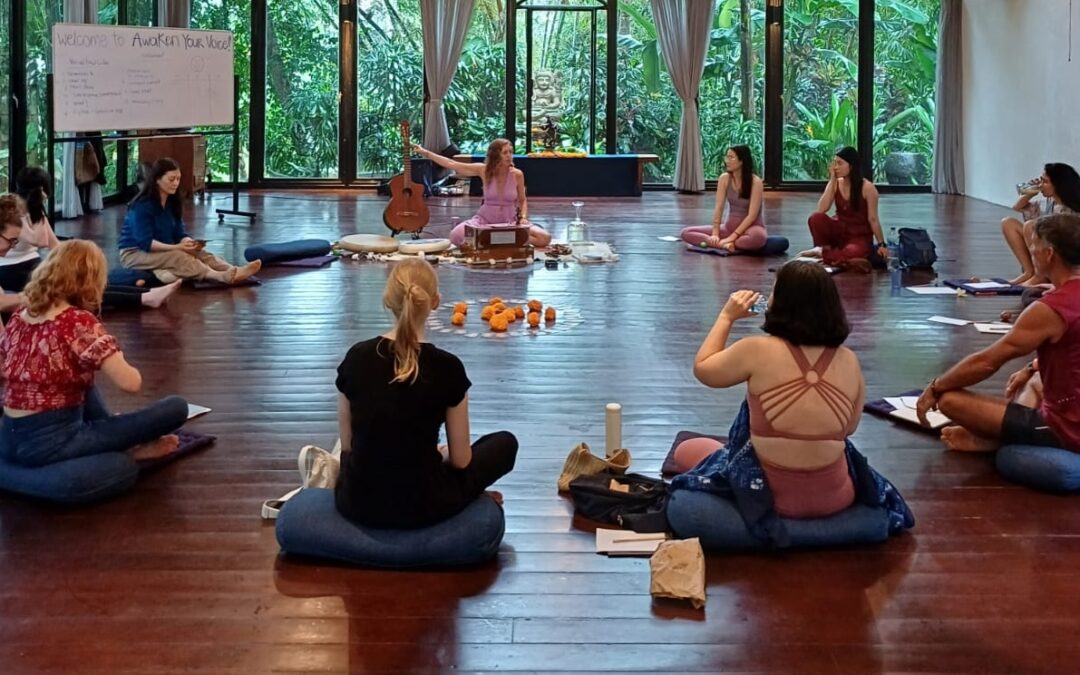
A circle of people sitting together in an open-air shala at the Embodied Resonance retreat

Do you ever feel like you’re not enough?
Or maybe, on the flip side, like you’re too much?

If so, I see you. I feel you. I am you.

The worthiness wound has been one of my biggest teachers, and truthfully, it’s still an ongoing journey for me. Even after years of singing, teaching and sharing my voice with the world, I still catch myself in moments of comparison, self-judgment and questioning my place.

Some days, I hear the old whispers:
“Who am I to take up space?”
“What if my voice isn’t good enough?”
“What if people judge me?”

Other days, it swings the other way:
“Am I too much?”
“Am I taking up too much space?”
“Will people think I’m full of myself?”

This push and pull, feeling not enough AND too much, is the paradox of the worthiness wound.

What is the worthiness wound?

The worthiness wound is the deep, often very early belief that you are not enough, or that you are too much. It often forms in childhood, when belonging meant shaping yourself around other people. In the body it tends to live in your throat and chest, so you hold back, go quiet, apologize before you speak, or push to prove yourself. It heals slowly, in safe relationships, and through giving your voice small, repeated experiences of being heard.

Where the worthiness wound comes from

For so many of us, growing up with big emotions in families that didn’t have the tools to truly see or understand us, where the response was often to medicate, dismiss or ignore, led to deep self-suppression. We learned to shape-shift, to people-please, to stay small and to keep from disrupting the delicate balance of our family systems.

One of my biggest teachers, Gabor Maté, speaks about the tension between attachment and authenticity. As kids, our need to belong, to feel safe, to be loved, often trumped our ability to fully express who we truly are. That can leave us feeling lost as adults, when we start to feel the call to strip away the masks, the personas and the voices we’ve crafted to fit into the world.

So who are we really, underneath all that?
And how do we give ourselves the space and freedom to be who we are, whether or not we’re accepted for it?

I believe that, with few exceptions, our parents did the best they could with what they had. No one intentionally sets out to suppress their children’s voices. Healing, becoming who we truly are, is a journey of unlayering, of releasing the adaptive patterns that once kept us safe and no longer serve us.

And at the core of this process? We often find trauma, much of it rooted in our earliest relationships. Just as trauma is formed in relationships, it is also healed through them.

The worthiness wound and the throat chakra

The worthiness wound is mental, and it is also energetic, emotional and deeply somatic.

The throat chakra, Vishuddha, is the energy center of authentic expression, truth and self-worth. It governs how freely we communicate, sing and share our voices. (If you want to go deeper here, I wrote a guide on how to balance your throat chakra.)

When our worthiness is in question, the throat closes.
We hesitate. We hold back. We silence our truth.

And the worthiness wound can block the heart too.

So many of us struggle with feeling disconnected from love, joy and authentic self-expression because deep down, we don’t feel worthy of being seen and received fully.

We fear rejection.
We doubt ourselves.
We let the fear of being too much convince us to be less.

And this costs us so much.

When we make ourselves small, we rob the world of our gifts.
When we shrink our voice, we suppress our truth.
When we doubt our worth, we deny ourselves the joy of full expression.

No matter how powerful, successful or “together” someone may seem, this wound is universal. Worthiness is a shared human experience. It is our struggle, all of ours, and by acknowledging it and bringing it into the light, we can begin to heal.

How the worthiness wound shows up in your voice

In my work, I meet the worthiness wound most often in the body and in the voice. When early experiences taught you that expressing yourself led to dismissal or disappointment, your nervous system learned to protect you by shrinking your voice. It can sound like:

  • Fading out at the end of your sentences
  • Apologizing before you speak
  • Upspeak, so a statement arrives sounding like a question
  • Matching other people’s tone to avoid conflict
  • Losing your voice, or going blank, under pressure
  • Pushing and getting louder, to prove you deserve the space

These are the freeze, fawn and fight responses living in your throat. I map all four survival responses onto the voice in Trauma and the voice.

How to use your voice for self-healing: 5 ways to heal the worthiness wound

The insight lives in your head. The block lives in your body. So these five practices move from your thoughts into your body and your sound.

1. Recognize the inner critic and question the story

That voice of self-doubt, that feeling of “not enough”, is an old wound speaking.

Ask yourself:
“Is this belief really mine? Or was it given to me by culture, teachers, family, society?”

Then reframe it.
When you hear “I’m not good enough,” try saying “I am learning, growing, and already enough.”
When you hear “I have nothing valuable to share,” try saying “My voice is meaningful because it is real.”

2. Give yourself permission to take up space

You are allowed to take up space. You deserve to be seen and heard.

Try this:

  • Feel your feet on the floor and soften your jaw.
  • Stand tall, open your chest and take a deep, expansive breath.
  • Imagine your voice filling the entire room.
  • Say out loud: “I am worthy of being heard.”
  • Sing a sound that feels full, open and embodied.

The more you practice owning your space, the more natural it becomes. If you would like a guide, the Permission to Sing meditation in my free Somatic Voice Starter Kit was made for exactly this.

3. Let go of sounding “good enough”

So much of the worthiness wound around the voice comes from the idea that we have to prove something, that our voice has to be “good enough” to deserve to be heard.

What your voice asks for is presence.

Sing because it feels good.
Express because you need to move energy.
Use your voice for the joy of it.

Ask yourself:
“What if I let go of being ‘good enough’ and focused on being fully present?”

4. Hum, tone and chant to open your throat

When the throat is blocked, the best way to clear it is to use it. You find your voice by using it.

  • Humming (awakens resonance and flow)
  • Toning (long, open sounds like AHHH, OHHH, EEEE)
  • Mantra singing (repeating simple sounds to open the channel)
  • Shouting or laughing (yes, really, make some noise!)

A 90-second way to start: soften your jaw and let your teeth come apart. Take three audible sighs. Hum once, on any note, and notice where you feel it, in your chest, throat, face or lips. Then hum once more, a little longer. Humming counts!

The more you use your voice, the more you tell your body:
“It is safe for me to express.”

5. Remember that worthiness is a choice

Worthiness is something we choose to believe in, again and again.

You are already worthy, before you do more, be more or achieve more.

Try this affirmation:
“I am worthy of love, joy and expression. My voice is valuable. I take up space with ease and grace.”

Your voice is ready to be heard

Healing the worthiness wound is ongoing work that asks for patience, and often for being in relationship, to peel back the most subtle layers. Be gentle with yourself on the days the old whispers come back. They come back for me too.

If you want to feel how worthiness lives in your whole body, read cultivating embodied resonance next.

You are worthy. Your voice matters.

Which of those old whispers do you hear most often?

About Francie

Francie La Flow is a voice healer, somatic guide, bhakti musician and retreat leader based in Ubud, Bali, with more than 15 years of experience. She holds an E-RYT 500 with Yoga Alliance and a BA in Psychology and Philosophy from McGill University, and is trained in Compassionate Inquiry. She works with people all over the world through 1:1 sessions, online programs and retreats in Bali and Thailand.

Sound and Pleasure: How Your Voice Connects Your Womb and Your Heart

Sound and Pleasure: How Your Voice Connects Your Womb and Your Heart

Sound and Pleasure: How Your Voice Connects Your Womb and Your Heart

by Francie La Flow

Your voice and your womb are mirrors of each other. They’re two of the most powerful centers of expression in your body, the places where something moves from deep inside you out into the world.

I first shared this as the 3V Connection, in a live conversation and then a masterclass with Sofia Araújo, founder of Swara Yoga School, all about the voice, the vagus nerve and the womb. This is my guide to how your womb, your heart and your voice are linked in your body, what researchers have found about sound and pleasure, and a simple practice you can try tonight with your own two hands.

How does your voice connect your womb and your heart?

Through your breath and your nervous system. Your diaphragm and your pelvic floor move together with every breath, so a low, soft breath softens the pelvic floor that cradles your womb. The nerves that move your vocal folds are branches of your vagus nerve, which runs down through your throat, heart and belly. Your heart rhythm follows your breath, so a long sung exhale changes it, and singing and music you love have been linked to dopamine, endorphins and oxytocin. A body that feels safe can feel pleasure, and sound is one of the fastest ways in. To feel it, place one hand on your womb and one on your heart, soften your jaw and hum low.

Francie La Flow standing in prayer, eyes closed, against open sky

Your diaphragm and your pelvic floor breathe together

Your diaphragm is a dome of muscle under your lungs. Your pelvic floor is a hammock of muscle at the base of your pelvis, and it cradles your bladder, your bowel and your womb. The two of them work as a pair.

When you breathe in, your diaphragm drops and your pelvic floor lowers and softens with it. When you breathe out, both lift. In 2011, a team led by Helga Talasz watched this happen on MRI and saw the two moving in parallel, breath after breath.

So when your breath stays high and tight in your chest, your pelvic floor tends to stay held too. Let your breath drop low and soft into your belly, and the whole base of your body gets permission to let go.

Your voice feels the difference straight away. Sound sitting on a high, held breath tends to come out thin and pushed. Sound sitting on a low, soft breath has somewhere to land, so it comes out lower and fuller.

Your jaw and your womb soften together

Clench your teeth for a moment and notice what happens low in your pelvis. Now let your jaw hang loose, lips soft, and notice again.

Many midwives, doulas and bodyworkers see the jaw and the pelvic floor soften together, which is why a loose, open mouth and long, low sounds are so often encouraged in labour. It’s widely observed and only lightly researched, so hold it as something to feel for yourself.

For your voice, your jaw is the gate. Clamp it and the sound squeezes through. Soften it and the sound can pour out.

Your vagus nerve runs from your throat to your belly

The vagus nerve is the longest cranial nerve in your body. It runs from your brainstem down through your throat, your heart and your belly, and it plays a big part in how your body moves between feeling on guard and feeling settled.

The nerves that move your vocal folds are branches of your vagus nerve. So every hum, sigh and song you make happens right in its neighbourhood.

It may carry messages from even lower down. Barry Komisaruk and Beverly Whipple spent years studying women with complete spinal cord injuries, some of whom could still feel sensation from the cervix, at the neck of the womb. Their brain imaging study, published in 2004, suggests the vagus nerve can carry that sensation from the cervix to the brain, bypassing the spinal cord.

Your throat and your womb are on speaking terms!

Your heart follows your song

Your heart speeds up a little every time you breathe in and slows a little every time you breathe out. A long sung phrase is one long, slow out-breath, so singing shifts your heart rhythm while you sing.

Singing with other people adds something sweeter. In 2013, Björn Vickhoff and his team in Sweden measured the heart rates of choir singers and found them rising and falling together as they sang, shaped by the structure of the song.

Maybe that’s why a circle of women singing one simple song can feel like one body breathing.

Sound and pleasure: what the research shows

When I say pleasure, I mean aliveness: sensation, warmth low in your belly, a flush across your chest, the kind of joy that makes your hips want to sway. Your voice can take you there quickly, and researchers have been measuring some of why.

  • Music you love releases dopamine. In 2011, Valorie Salimpoor and her colleagues at McGill, my old university, found dopamine released in the brain at the most moving moments of music people loved, and in the moments just before them.
  • Singing together raises your pain threshold. In 2012, Robin Dunbar’s team at Oxford found that singing, dancing and drumming raised people’s pain thresholds, an effect they linked to endorphins. Passive listening didn’t have the same effect.
  • A singing lesson can raise oxytocin. In 2003, Christina Grape and her colleagues in Sweden measured singers before and after a lesson and found their oxytocin rose, and the amateur singers said they came out of it feeling more joyful.
  • Humming changes the air in your nose. In 2002, Eddie Weitzberg and Jon Lundberg found that humming raised nasal nitric oxide to about fifteen times the level of a quiet exhale.

A body that feels safe can feel pleasure

A body that feels safe can feel pleasure, and pleasure tells your nervous system it’s safe. Each one opens the door to the other, and sound is one of the fastest ways into both.

When you’re braced, your breath climbs, your jaw clamps, your pelvic floor tends to grip and your voice goes thin. When you soften, they tend to let go together. A low hum is often the easiest place to start, because any note at all will do, and how it sounds is nobody’s business but yours.

Sometimes the first sound that comes is a sigh you’ve been holding for years, or a few tears. Let those come too. Through the darkness is how we get to the light.

So relax into sound instead of reaching for it. Reaching is effort, and effort tells your body there’s still work to do. Relaxing into sound tells your body it can stay.

Your cycle and your voice

Understanding the four seasons of the menstrual cycle instantly changed my life. Living in rhythm with my own cycle helped me feel more aligned and more joyful.

In this yogic and energetic way of seeing, your bleed is your inner winter, the days after it are spring, ovulation is summer, and the days before your next bleed are autumn. Your voice can follow the seasons too. You might play with:

  • Winter: soft humming and long sighs, with very little effort
  • Spring: playful, curious sounds and new notes
  • Summer: big, open, joyful singing
  • Autumn: lower, slower tones and honest words

Hold this as an invitation to listen. If you don’t bleed, many women follow the phases of the moon instead.

A womb-to-heart practice

Give yourself five quiet minutes somewhere you feel comfortable making sound.

  1. Place one hand low on your belly, over your womb, and the other on your heart. Let your teeth come apart and soften your jaw.
  2. Breathe down into your womb and your pelvic floor. Feel your belly and the base of your pelvis widen as you breathe in, and lift as you breathe out. Take five or six slow breaths like this.
  3. Hum a low “mmm”, as low as it wants to go, and feel for it under your lower hand. Let your hips sway if they want to.
  4. Open your mouth into “ahh” and let the sound rise. Feel it move up into your chest, under your top hand, into your heart.
  5. Follow what feels good. Slide between notes, sigh, laugh, go back to humming. Whatever it sounds like is right.

When you finish, keep your hands where they are for one more breath and notice what feels different.

These breath and sound practices work in every body, so men and anyone without a womb are so welcome to try them too. Rest your lower hand low on your belly and breathe into your pelvic floor.

One gentle note. If you have pelvic pain, pain during sex, or hoarseness that lasts more than a few weeks, please see a doctor or a pelvic health physiotherapist first. These practices sit alongside that care.

Keep going

If you’d like to be guided, my free Somatic Voice Starter Kit is a gentle place to begin. It has a Permission to Sing meditation, a vocal care ritual and a playlist to sing along with, and nobody hears you but you.

If your throat tends to tighten before the words come, read how to balance your throat chakra. If your voice goes quiet under stress, read trauma and the voice. And to feel how all of this lives in your whole body, read cultivating embodied resonance next.

Tell me, when you hum low with one hand on your womb, where do you feel it?

About Francie

Francie La Flow is a voice healer, somatic guide, bhakti musician and retreat leader based in Ubud, Bali, with more than 15 years of experience. She holds an E-RYT 500 with Yoga Alliance and a BA in Psychology and Philosophy from McGill University, and is trained in Compassionate Inquiry. She works with people all over the world through 1:1 sessions, online programs and retreats in Bali and Thailand.

Be.Do.have

Be.Do.have

Get Clear with Be.Do.Have

An Uncomplicated Way to Gain Clarity and Achieve your Goals

Why the Be-Do-Have Model Is a Powerful Tool for Clarity and Transformation

The Be-Do-Have model is one of my all-time favorite rituals for aligning with my visions and creating meaningful change in my life. It’s like programming an inner GPS that helps you navigate where you want to go, who you want to become, and the actions needed to get there.

This simple yet profound tool has been widely used in coaching and personal development circles. I first discovered it in the Conversations with God books, and it has stuck with me as a trusted companion in my journey of growth and transformation.


What Makes This Exercise So Valuable?

Life can feel overwhelming at times, with so many goals, dreams, and responsibilities pulling us in different directions. The Be-Do-Have framework helps cut through the noise, bringing clarity to any area of your life. By breaking your vision into three manageable steps—who you want to BE, what you want to DO, and what you want to HAVE—you can start creating a roadmap that’s simple, actionable, and aligned with your true self.

Here’s why it works:

  • It simplifies complexity. Instead of overthinking, you focus on what’s truly important in the present moment.
  • It fosters self-awareness. You get clear on who you need to become to bring your goals to life.
  • It keeps you grounded. By revisiting your statements regularly, you can stay connected to your intentions, especially during moments of doubt or distraction.

How to Use the Be-Do-Have Model

💡 Step 1: Be
Ask yourself: Who do I aspire to be?
Write down 3-5 “I am” statements that reflect the qualities and mindset you want to embody.
Examples:

  • I am confident and courageous.
  • I am abundant and open to receiving.
  • I am joyful, creative, and aligned with my purpose.💡 Step 2: Do

What actions will align with your way of being?
Write down 3-5 things you’d like to accomplish, experience, or create.
Examples:

  • Launch a new project or business.
  • Develop healthier habits.
  • Deepen your relationships.

💡 Step 3: Have
What outcomes do you want to manifest?
Write down 3-5 things you’d like to have as a result of your actions.
Examples:

  • Financial freedom and stability.
  • A strong sense of inner peace.
  • A supportive and connected community.

Bringing It All Together

Once you’ve outlined your Be-Do-Have, reflect on this question:
Who do I need to BE to make these dreams a reality?

The key is to approach this with honesty and simplicity. Don’t overthink it—just write down what comes to mind. Save your list where you can easily access it and refer back to it throughout the year. Think of it as your personal compass, helping you stay on track and aligned with your deeper purpose.

✨ Ready to try this life-changing exercise?
Click below to download your free guide and start creating the clarity, alignment, and transformation you deserve.

Ready to Try your Be-Do-Have and Get Clear?

…Click the Image Below to Download your FREE pdf…


Are you calling in support to Get Clear,  Deepen your Practice, Find more Flow & Live Inspired?

E-RYT 500 Yoga Alliance | Post-Grad Dip. Education, Queensland University of Technology | BA Psychology / Philosophy, McGill University


Yogi, Retreat Leader, Teacher Trainer, Event Curator and Creator of the award-winning Pure Flow Yoga School and boutique Retreat Center in Thailand, voted one of the top 8 Retreats worldwide by the Guardian, 2018. 


Francie is a dedicated Yogi, sacred sounds musician, entrepreneur, producer, and joy-spreader on a mission to uplift, educate, inspire and empower people to live embodied, joyful, connected, playful, fulfilled and awakened lives 


As a devoted practitioner and life-long student, Francie has studied thousands of hours with master spiritual teachers worldwide, and has curated, organised and led more than 200 transformational Yoga Retreats, teacher trainings, workshops and programs with over 3,000 students from all walks of life.


Francie’s classes are light and playful, yet deep and meaningful experiences to unwind your mind, open your heart and embody flow .


Francie is dedicated to uplifting, inspiring and empowering people to live joyful, connected, and awakened lives, and she is committed to being in service and to living an exceptional life of community, co-creation, celebration and flow.

Francie Fishman

Founder & Creator of Pure Flow Yoga, Teacher & Educator, Pure Flow Yoga

Finding Authenticity and Healing through Sister Singing Circles

Finding Authenticity and Healing through Sister Singing Circles

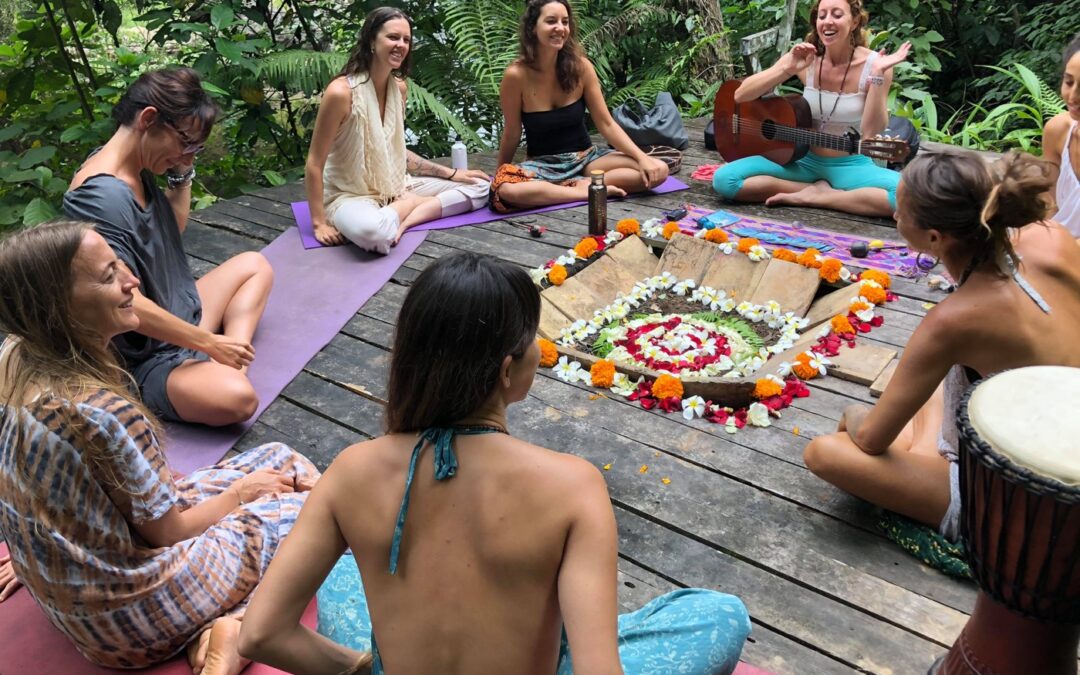
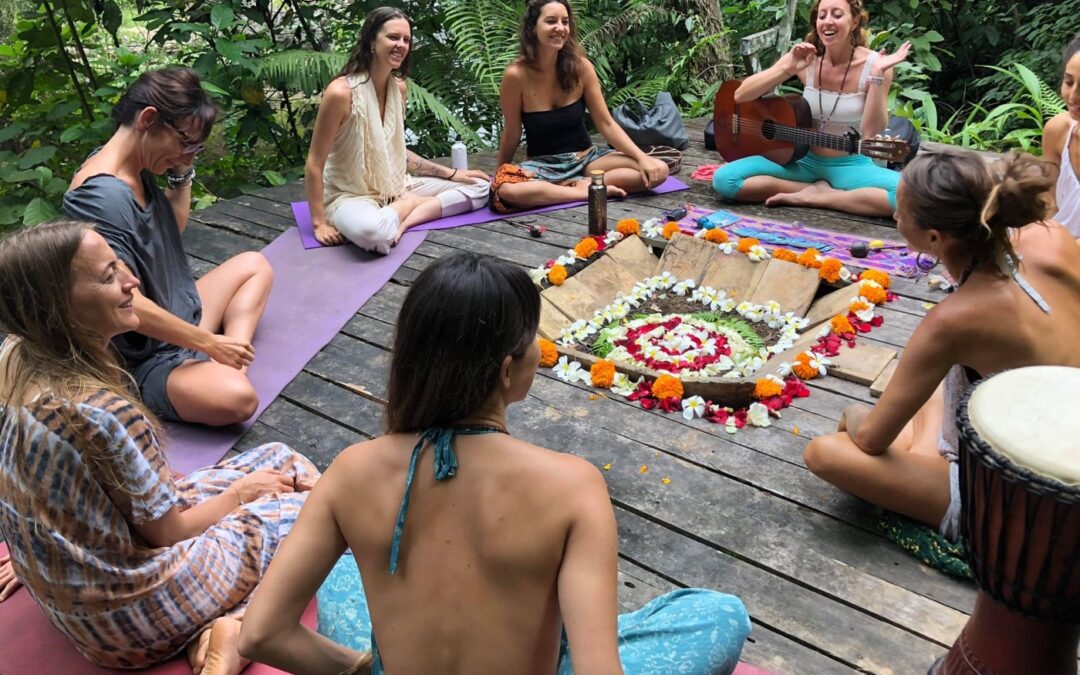
A sister singing circle gathered on a wooden deck around a flower mandala in the Bali jungle

The Power of Women Coming Together: Embracing Authenticity and Healing through Sister Singing Circles

by  Francie La Flow

The Power of Women Coming Together: Embracing Authenticity and Healing through Sister Singing Circles
  I first discovered the transformative power of sister singing circles during my time in Bali, where the serene beauty of the island matched the profound connections I made with other women. It was here that I met the incredible Lindsey Wise, who introduced me to these sacred gatherings. What started as simple singing sessions quickly became so much more—spaces where women could come together to share not only their voices but their stories, emotions, and deepest selves. Each time I returned to Bali, these circles felt like coming home. We would gather, new and old sisters alike, and enter a timeless flow of repetition and harmony, emotions rising and falling like the ocean waves surrounding us. Week after week, I watched as women began to feel more comfortable, more authentic, and more connected. There was a palpable sense of joy and freedom as we let go of judgment and embraced the present moment. New voices would rise, and together, we would create a fresh wind of inspiration, love, and connection. One of my favorite quotes from Gabor Maté is, “Safety is not the absence of threat but the presence of connection.” This sentiment beautifully captures the essence of our sister singing circles. These gatherings became a haven where we could truly be seen and heard, where we felt safe to express ourselves just as we are. It’s in these spaces that the magic happens—where authenticity, healing, and connection flourish.
The Magic of Sister Singing Circles

The true essence of a sister singing circle lies in its ability to create a supportive environment where women come together to explore their voices and share their stories. These gatherings transcend mere singing; they become sanctuaries where vulnerability meets acceptance, and where every voice is valued. It’s about stepping into our fullest selves, supported by a community that celebrates healing, authenticity, and growth.

As we sing together, we return to something ancient and sacred—a way to feel more alive and connected, both to ourselves and to the women around us. In these circles, everyone’s voice is honored, and we all experience the magic of sound as a pathway to wholeness and joy.

Over the years, I’ve learned so much from leading these circles. Here are some of the most powerful lessons and insights I’ve gained:

  1. Take Up Space One of the most profound lessons from sister singing circles is the importance of taking up space. This isn’t just about singing louder; it’s about embracing the physicality of sound and allowing ourselves to be fully present. By opening our mouths wide, dropping our jaws, and giving ourselves permission to be heard, we not only enhance our vocal expression but also carve out space for ourselves in the world. This practice aligns us with our spiritual essence, allowing our authentic selves to resonate a nd shine brightly.
  2. Embrace Vulnerability Allowing ourselves to be seen is an act of profound vulnerability. Our emotions are intricately connected to our voices, and sharing them can be daunting. The fear of judgment, especially self-judgment, often holds us back. Yet, it is through this vulnerability that we find connection and healing. Singing in front of others becomes a journey of overcoming internal barriers and embracing our true selves, leading to deeper connections and profound healing.
  3. Cultivate a Growth Mindset Singing, like any practice, requires persistence and a positive mindset. Recognizing that it’s okay to feel emotional during the process opens the door to growth. As we practice, we improve our vocal control, discover the joy of singing, and channel our creative energy more effectively. This journey of growth is transformational, helping us unlock our full potential and supporting our spiritual evolution.
  4. Rise in Resonance The synergy that emerges when we gather in singing circles is powerful. Witnessing others step out of their comfort zones and embrace their own vulnerability inspires us to do the same. This shared experience fosters a sense of unity and collective growth, enhancing both our individual and group development. The resonance of our voices coming together creates a powerful, healing vibration that deepens our connections and amplifies our collective energy.
  5. Let Your Heart Shine! Singing transcends the physical act of producing sound; it is about connecting with the energy of the heart. To sing beautifully and openly, we must engage our entire being—physically, emotionally, and spiritually. By connecting with our hearts through song, we tap into our inner truth and express our authentic selves more fully.
  6. Give Yourself Permission One of the most important lessons I’ve learned is the need to give ourselves permission—permission to take up space, to be vulnerable, to grow, and to connect with our hearts. So often, we hold back because we don’t feel we’re allowed to fully express ourselves. In sister singing circles, we practice giving ourselves that permission, and in doing so, we unlock new levels of freedom and joy.
Join Us in Bali and Beyond
If you’re inspired to experience the magic of singing circles in person, join me for in-person or online upcoming classes, retreats, and training: In-person
  • 50-Hour Women’s Health & Yoga Teacher Training in Spain October 14-20, 2024 This integrative program is designed for women of all backgrounds and combines energetic practices and philosophical explorations to embrace your natural rhythm and feminine flow. Dive into Yoga, Ayurveda, Traditional Chinese Medicine, Taoism, Tantra, and Vocal Activation to explore women’s anatomy, hormonal health, Ayurvedic practices, holistic nutrition, and the transformative power of sacred sound.
  • 50-Hour Embodied Resonance Retreat & Training in Bali December 8-14, 2024 Join us in breathtaking North Bali for a soul-stirring journey of self-discovery, rejuvenation, and empowerment. Immerse yourself in Bhakti Flow Yoga, Vocal Activation, and creative expression. Discover your flow, unlock your authentic voice, and ignite your creative potential through movement, mantra, music, ritual, and community.
  • Weekly Classes & Workshops at The Yoga Barn, Bali Dive into the transformative power of vocal expression and community connection. Join me for regular classes and workshops that explore the depths of your voice and connect you with a global community of songbirds.
Online
  • 1:1 Mentorship Wanna go deeper and learn how to facilitate a singing circle like a pro? Join me for private mentorship. This YACEP-certified continuing education mentorship is designed to help you level up your space-holding, personal healing, and development while supporting your business with flow coaching.
  • Vocal Flow Sanctuary – Virtual Community Want to sing with us? Join our vibrant community in the Vocal Flow Sanctuary and embark on a transformative journey that will elevate your voice, connect you with like-minded souls, and deepen your practice.
Let’s explore the depths of your voice together and create a harmonious, empowering experience!
How to Start Your Own Singing Circle
Starting a singing circle is a wonderful way to create a space for connection and healing. Here are some steps to help you begin:
  • Create a Welcoming Space: Choose a comfortable, quiet location where participants can gather and feel at ease. Ensure the space allows for both sitting and standing, as well as room for movement if needed.
  • Set Clear Intentions: Define the purpose of your singing circle. Whether it’s for personal growth, community connection, or creative expression, having a clear intention helps guide the experience.
  • Gather Your Community: Invite friends, family, or colleagues who are interested in exploring vocal expression. Emphasize that the circle is a space for everyone to be themselves without judgment.
  • Prepare Your Practice: Plan a simple structure for your gathering, including warm-ups, singing exercises, and sharing time. Incorporate elements of spirituality, such as guided meditations or affirmations, to deepen the experience.
  • Foster an Open Environment: Encourage participants to express themselves freely and authentically. Create a supportive atmosphere where everyone feels comfortable sharing their voices and stories.
  • Embrace Flexibility: Allow the circle to evolve naturally. Each gathering may have its own rhythm and flow, and that’s part of the magic.